Buy Now
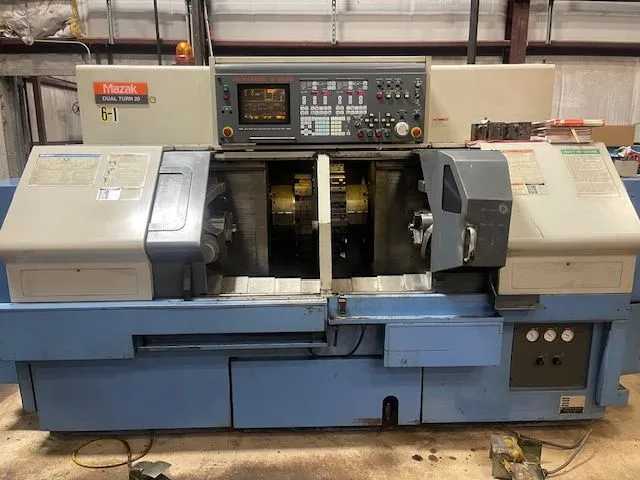
1995 Mazak Dual Turn 20 CNC Lathes, 12.6 in Turn Dia, 49.21 in Mach Len, 20 HP
$12,500
$207/moWisconsin
Specifications & Market Value
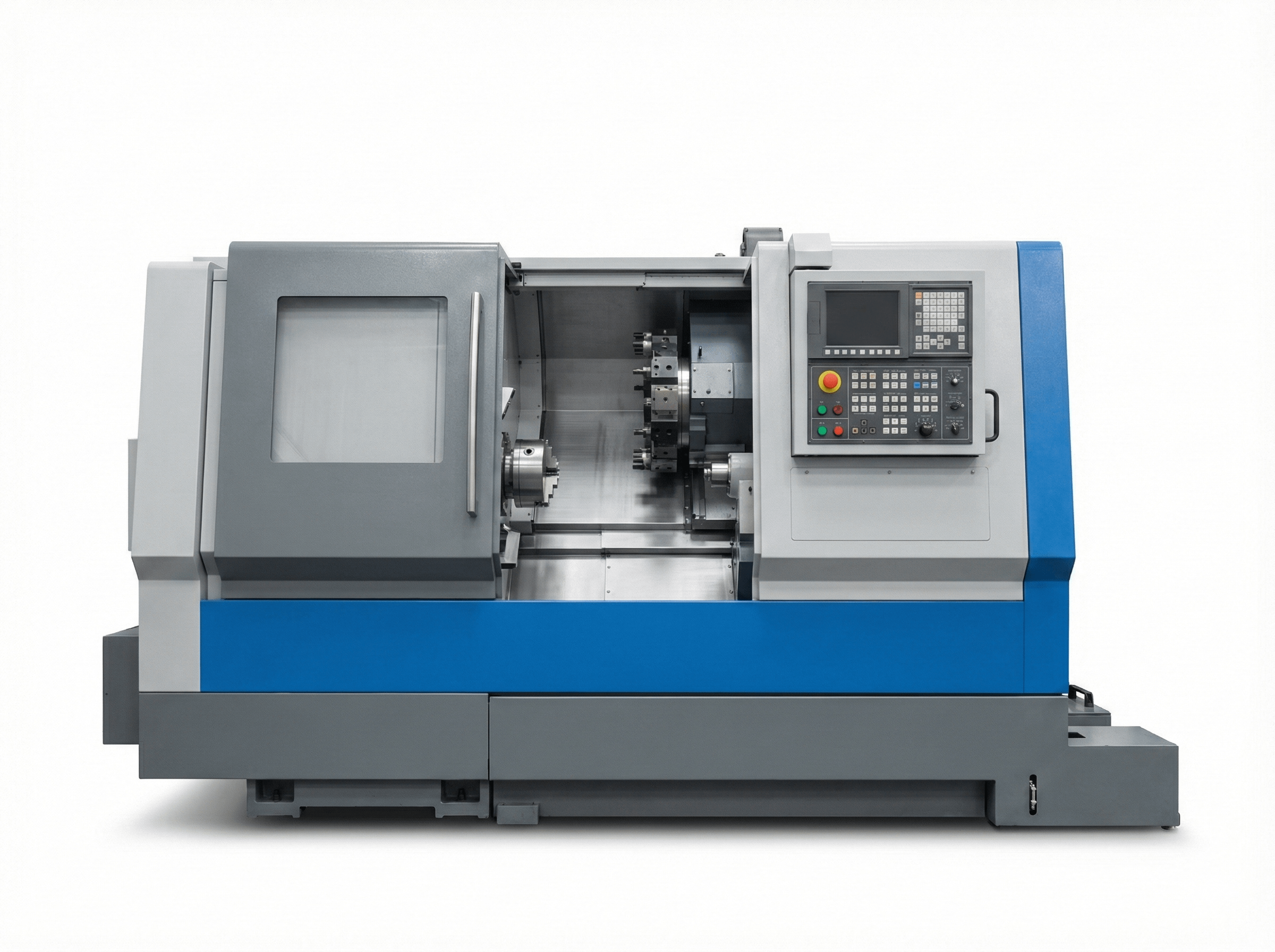
 Reference image
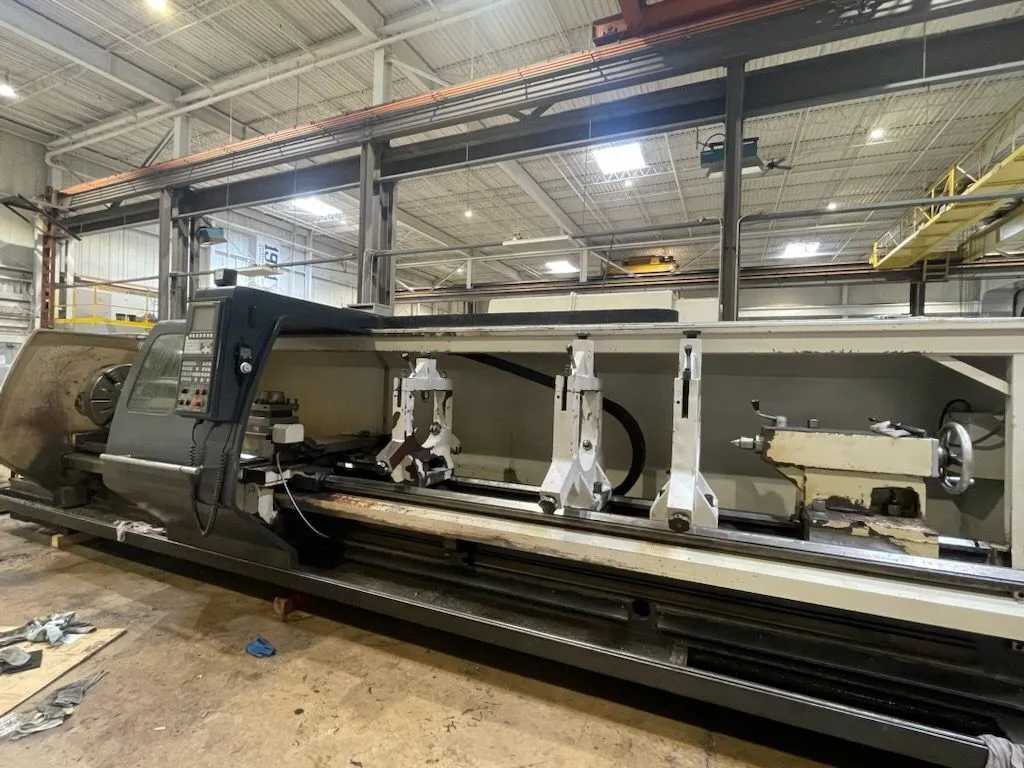
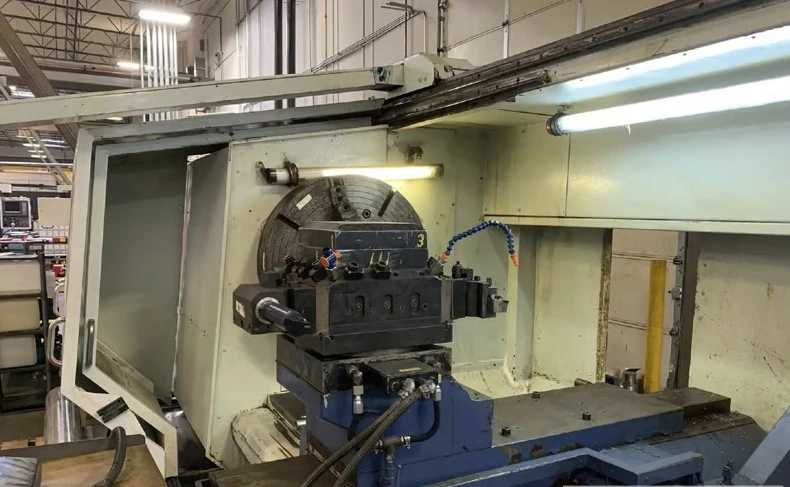
This CNC lathe machine features a **2-axis control system** operating along the X and Z linear axes, enabling precise turning operations by controlling diameter (X-axis) and length (Z-axis) movements. It is powered by a robust **37.3 kW motor** delivering high torque and efficient cutting performance. The spindle achieves a **maximum speed of 250 RPM**, suitable for machining large and heavy workpieces requiring strong force rather than high-speed cutting. The machine accommodates a **maximum swing diameter of 77.17 inches**, allowing for the turning of substantial diameter components. Equipped with a **tailstock**, it supports longer workpieces securely from both ends during machining, improving stability and precision. Control is managed via a **CNC system**, which enables automated, programmable machining with enhanced accuracy and repeatability. Typical applications include turning of large cylindrical parts for industries such as heavy machinery or aerospace. The machine likely features precision ball screws and servo-driven axes to ensure smooth, accurate tool movement. This setup is ideal for manufacturing large, symmetrical parts with moderate complexity where high rigidity and power are required rather than ultra-high spindle speeds or multi-axis tool paths. The 2-axis CNC lathe balances power, size capacity, and control sophistication for cost-effective production of substantial workpieces with consistent quality.
Specifications, market trends, and valuation estimates are compiled from manufacturer documentation, historical sales, and industry sources. While care is taken to ensure accuracy, this information is provided for reference purposes only and may contain errors or omissions. Users should independently verify all data before making buying or selling decisions. Valuations do not represent guaranteed transaction prices or binding offers, and Aucto assumes no liability for decisions made using this data.
Spot an error or missing detail? Help us keep our equipment guides accurate for the community.

 A+
A+ Auction Value
$129,000
 Range$25,000 – $185,000
 Sells in ~ 30 days
 Retail Value
—
Sells in ~ 180 days
Item functions as originally intended, shows signs of normal wear. Change the condition to see how it moves both values.
| Attribute | SelectedACER ATB 77 CNC LATHE | ACER ATB 85 CNC LATHE | |
|---|---|---|---|
| OEM | ACER | ACER | |
| Model | ATB 77 | ATB 85 | |
| Year | - | - | |
| Max Swing | 77.17 '' | 85.00 '' | |
| Max Spindle Speed | 250 RPM | 250 RPM | |
| Similarity | — | 99% | |
| Auction Value$25,000 - $185,000Retail Value— | Auction Value$5,000 - $28,000Retail Value— | |
| Current Machine | View Details |
Marketplace