Buy Now
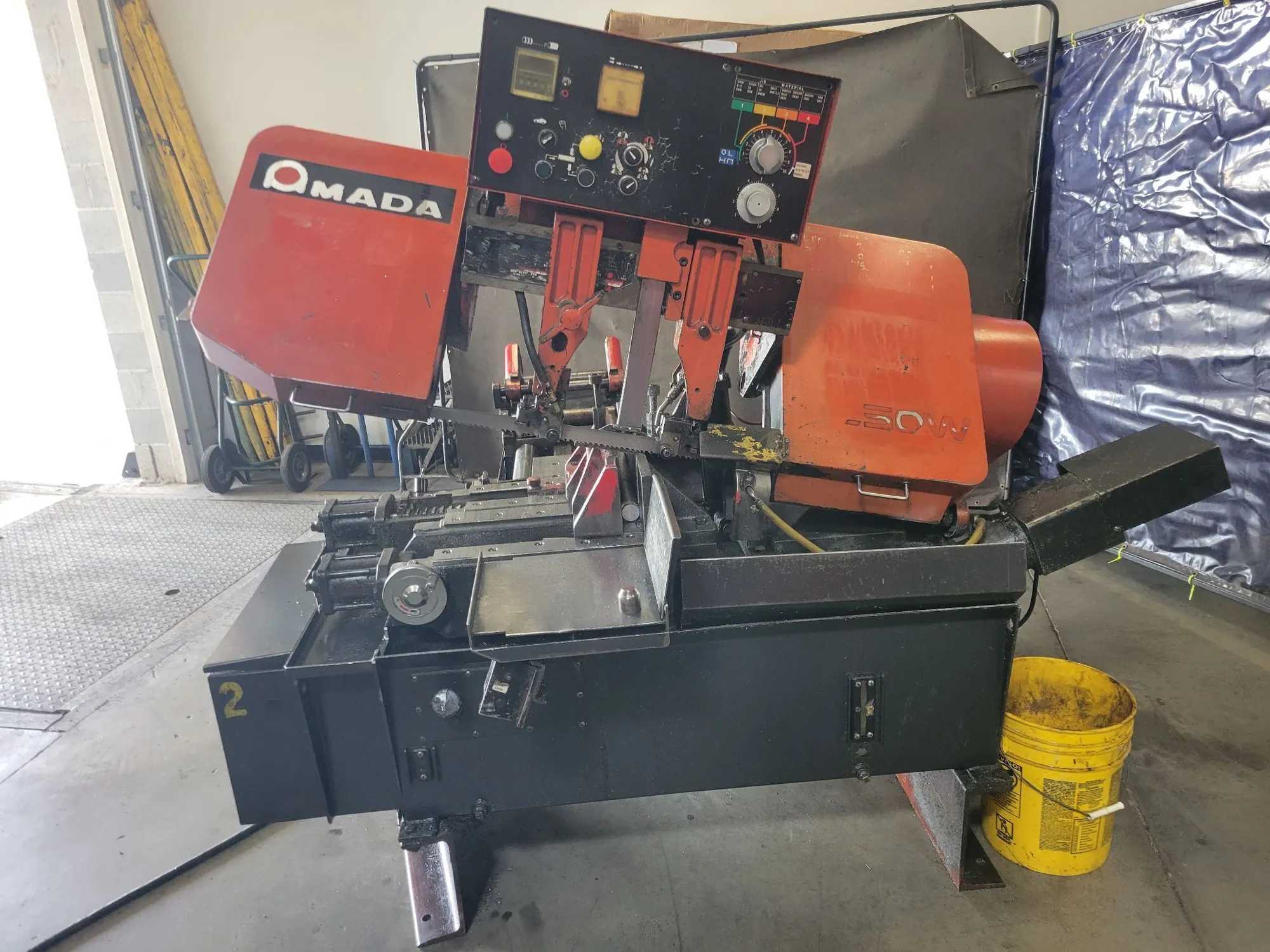
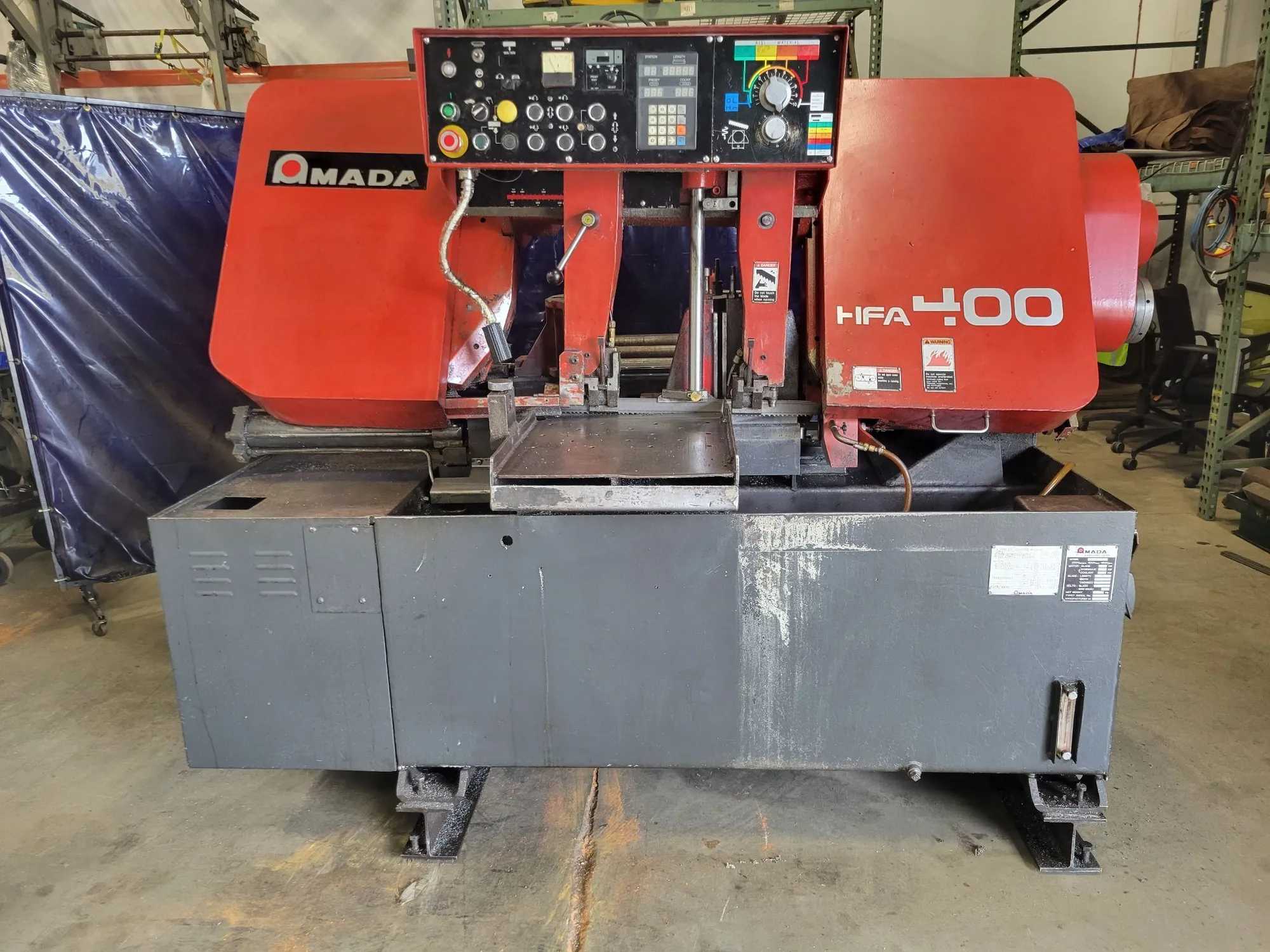
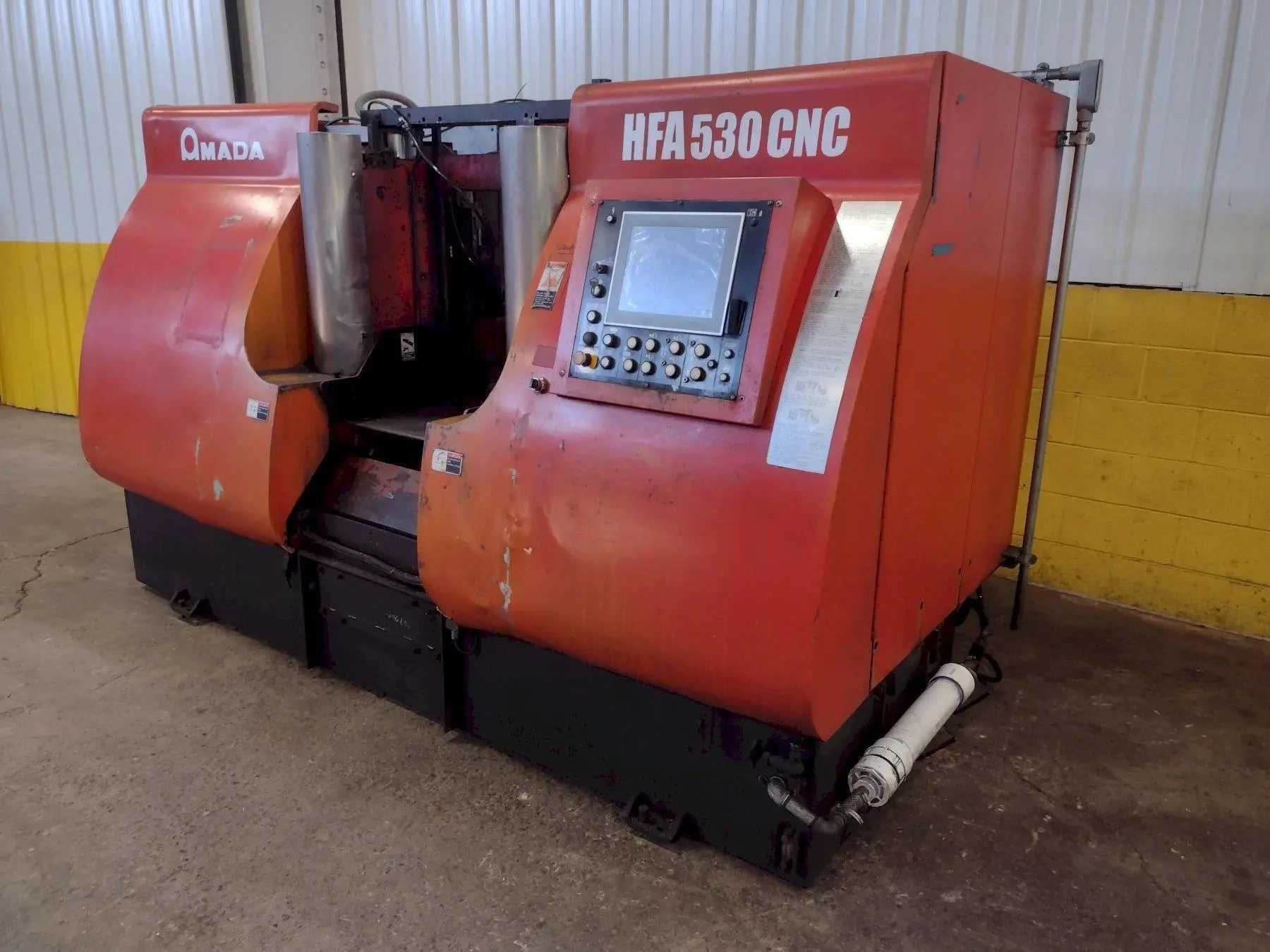
Amada Model HFA530CNC Automatic Horizontal Bandsaw, 10 HP, CNC Control, 220V 3-Phase
$29,500
$489/moIllinois
Specifications & Market Value
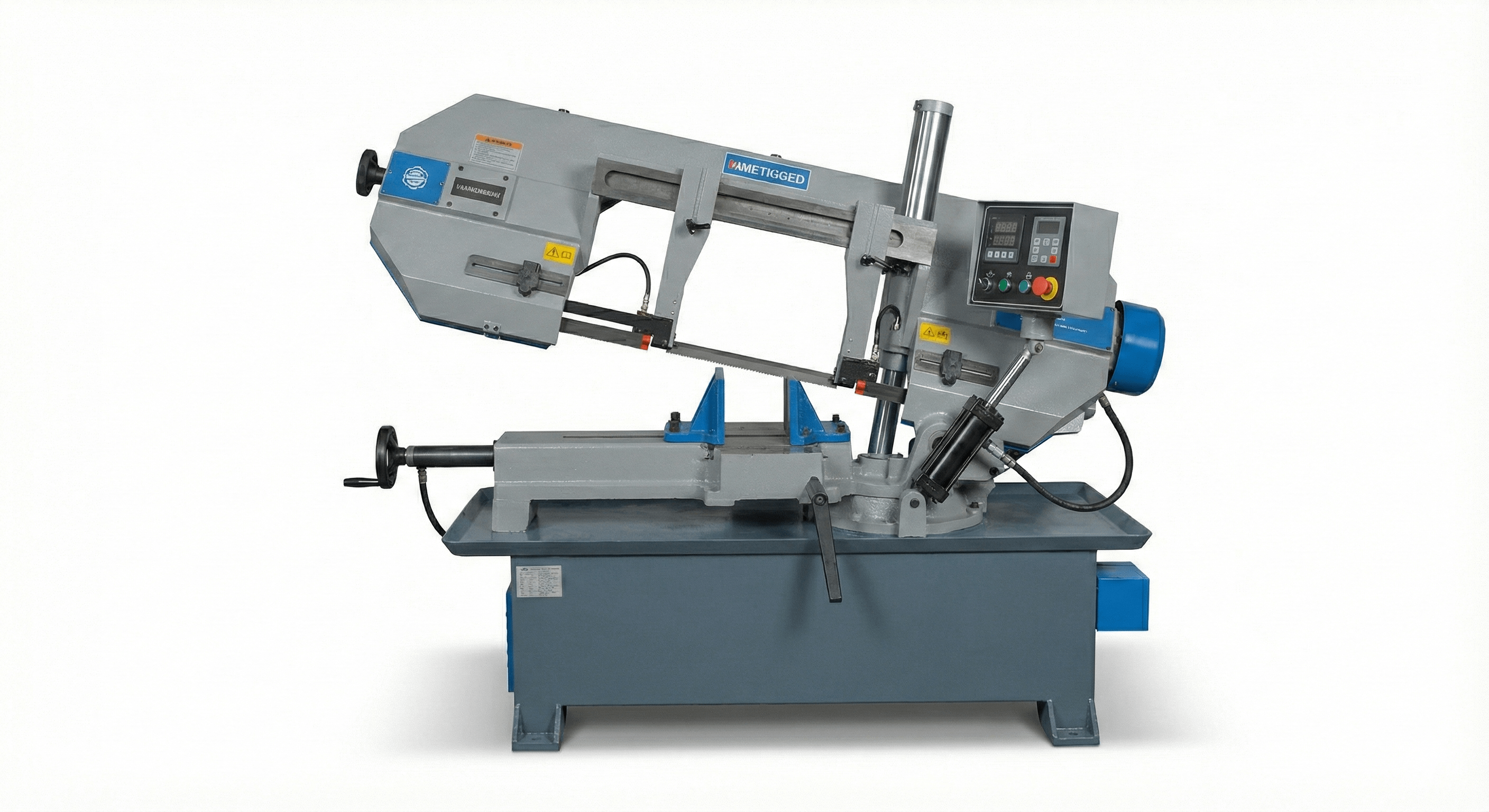
 Reference image
The AMADA PCSAW-430 Horizontal Band Saw is engineered for precision and efficiency in metal cutting applications, featuring a robust rectangular cutting capacity of 16.93 inches by 16.93 inches and a round cutting capacity ranging from 1.18 inches to 16.93 inches. This CNC-controlled machine is designed to handle a substantial workload of up to 6,613 lbs, making it ideal for heavy-duty operations. The saw blade measures 20 feet in length, with a thickness of 0.063 inches and a width of 2 inches, allowing for versatile cutting options. Blade speed is adjustable between 49 to 394 feet per minute via an inverter, ensuring optimal performance for various materials. The power supply operates at AC220V±10%, 3-phase, 60 Hz, with specific models requiring 25 kVA or 26 kVA. The cutting fluid system includes a 47.3-gallon tank and a 1/2 HP pump, providing efficient lubrication and cooling during operation. The machine dimensions are 112.2 inches in width and 83.2 inches in length, with height varying from 79.6 to 100.0 inches depending on the head position. Weighing 10,361 lbs, the PCSAW-430 is built for stability and durability. It features a remnant length capability of 3.94 inches plus the length of parts, and can produce between 1 to 9999 cut-off pieces, making it a versatile addition to any fabrication shop.
Specifications, market trends, and valuation estimates are compiled from manufacturer documentation, historical sales, and industry sources. While care is taken to ensure accuracy, this information is provided for reference purposes only and may contain errors or omissions. Users should independently verify all data before making buying or selling decisions. Valuations do not represent guaranteed transaction prices or binding offers, and Aucto assumes no liability for decisions made using this data.
Spot an error or missing detail? Help us keep our equipment guides accurate for the community.

 A+
A+ Auction Value
$73,750
 Range$25,000 – $100,000
 Sells in ~ 30 days
 Retail Value
—
Sells in ~ 180 days
Item functions as originally intended, shows signs of normal wear. Change the condition to see how it moves both values.
| Attribute | SelectedAMADA PCSAW-430 HORIZONTAL BAND SAW | AMADA PCSAW-330 HORIZONTAL BAND SAW | |
|---|---|---|---|
| OEM | AMADA | AMADA | |
| Model | PCSAW-430 | PCSAW-330 | |
| Year | - | - | |
| Material Feed Automation | Automatic | Automatic | |
| Power Requirement | 220V Three Phase | — | |
| Similarity | — | 100% | |
| Auction Value$25,000 - $100,000Retail Value— | Auction Value$20,000 - $81,500Retail Value— | |
| Current Machine | View Details |
Marketplace