DATRON NEO VERTICAL MACHINING CENTER
Equipment Overview
Share Link- OEM
- DATRON
- Model
- NEO
- Year of Manufacture
- -
- Category
- VERTICAL MACHINING CENTERS
Market Value Calculator
A+Technical Description
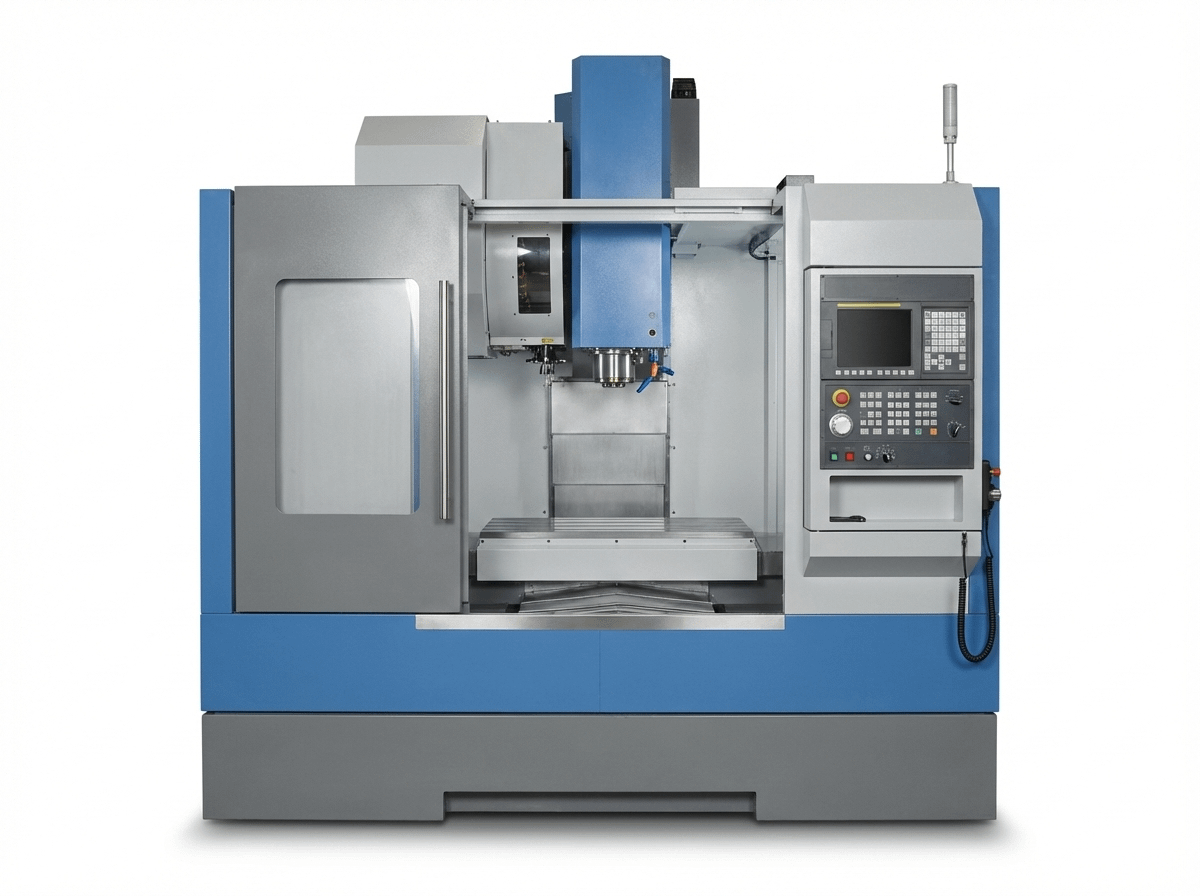
The DATRON NEO Vertical Machining Center is a compact, high-speed CNC machine designed for precision milling in prototyping and small production environments. It features a powerful 2 kW spindle capable of speeds up to 40,000 RPM, enabling fast and accurate machining of a wide range of materials. The machine operates on three axes (X, Y, Z) with a working area of 500 mm x 400 mm x 175 mm, providing ample space for versatile part setups. Its brushless digital servo drives and direct-drive ball-screw spindle system ensure smooth, precise movements and excellent surface finishes. The DATRON NEO is equipped with a 24-station tool magazine with direct-shank tool holders and an integrated tool length probe, allowing for efficient tool changes and consistent accuracy. The control system is powered by DATRON next software, offering an intuitive interface via a 24-inch multi-touch screen and a handheld control unit for easy operation. An ergonomic frontal access design, combined with an integrated camera and 3D probe, simplifies setup and enhances workflow efficiency. The machine’s robust construction, featuring a polymer concrete casting frame and aluminum table, ensures stability and low vibration during operation. With installation dimensions of 32" W x 51" D x 74" H and a weight of 1,543 lbs, the DATRON NEO is space-saving and suitable for integration into various workshop environments. Optional features include a 4th rotary axis, dust extraction, and ionization bar, further expanding its capabilities for complex and high-precision applications.
Technical Attributes
- Spindle Taper
- CAT 40
- Table Size (LxW)
- 32x51
- Max Spindle Speed
- 35,000.00 RPM
- Y-Axis Travel
- 16.50 ''
- Z-Axis Travel
- 9.00 ''
- X-Axis Travel
- 20.00 ''
- Spindle Power
- 15.00 HP
Data Accuracy and Verification
Specifications and technical details are compiled from manufacturer documentation, historical records, and third-party industry sources. While care is taken to ensure accuracy, this information is provided for reference purposes only and may contain errors or omissions. Users should independently verify all details before relying on them.
If you identify any inaccuracies, please help us improve our data by reporting them here.