DOOSAN PUMA VT750 CNC LATHE
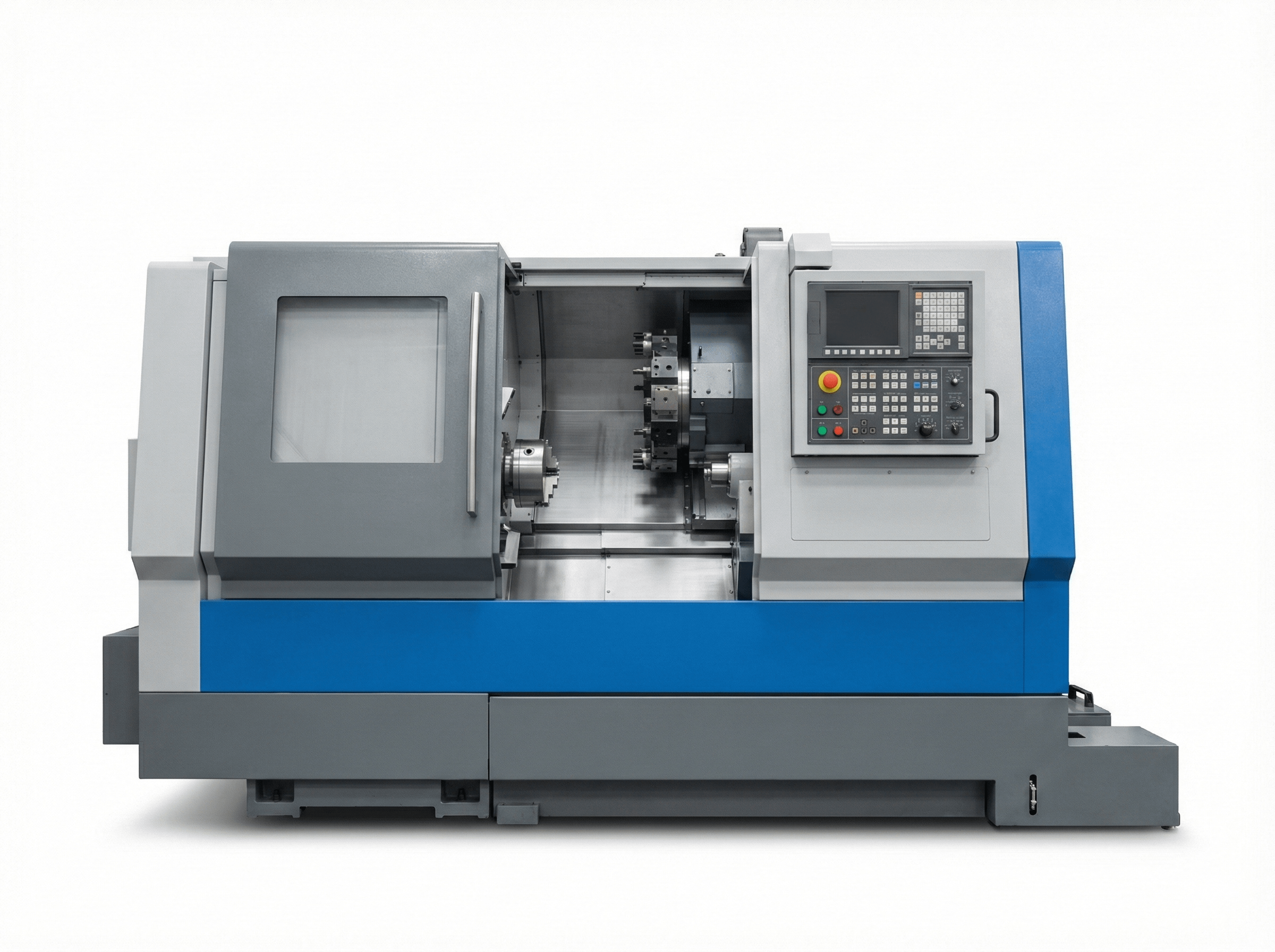
Equipment Overview
Share Link- OEM
- DOOSAN
- Model
- PUMA VT750
- Year of Manufacture
- -
- Category
- CNC LATHES
Market Value Calculator
A+Technical Description
This CNC lathe features a 24-inch chuck size, supporting workpieces up to 29.5 inches in maximum turning diameter and swing, with a maximum machining length of 29.9 inches. It operates on a 2-axis configuration (X and Z axes), enabling precise control over diameter and length dimensions during turning operations. The spindle reaches a maximum speed of 2,000 RPM, suitable for machining medium-sized parts with moderate surface finish and material removal rates. Controlled via a Fanuc 0iT CNC system, it provides reliable and user-friendly computerized numerical control to ensure high precision, repeatability, and efficient machining processes. The 2-axis setup allows for straightforward turning, facing, and threading tasks, making this lathe ideal for symmetrical cylindrical components. The lathe’s swing and turning diameter specifications indicate the largest part size that can be safely machined without interference, while the machining length specifies the maximum part length that can be accommodated along the Z-axis. The Fanuc 0iT control system offers advanced programming capabilities and stable operation for consistent production quality. Overall, this CNC lathe balances workable part size capacity and precision, optimized for applications requiring medium-scale turning with computer-controlled accuracy and repeatability.
Technical Attributes
- Max Spindle Speed
- 2000 RPM
- Control System
- FANUC I SERIES
- X-Axis Travel
- 15.20 ''
- Z-Axis Travel
- 29.90 ''
- Max Swing
- 29.50 ''
Data Accuracy and Verification
Specifications and technical details are compiled from manufacturer documentation, historical records, and third-party industry sources. While care is taken to ensure accuracy, this information is provided for reference purposes only and may contain errors or omissions. Users should independently verify all details before relying on them.
If you identify any inaccuracies, please help us improve our data by reporting them here.