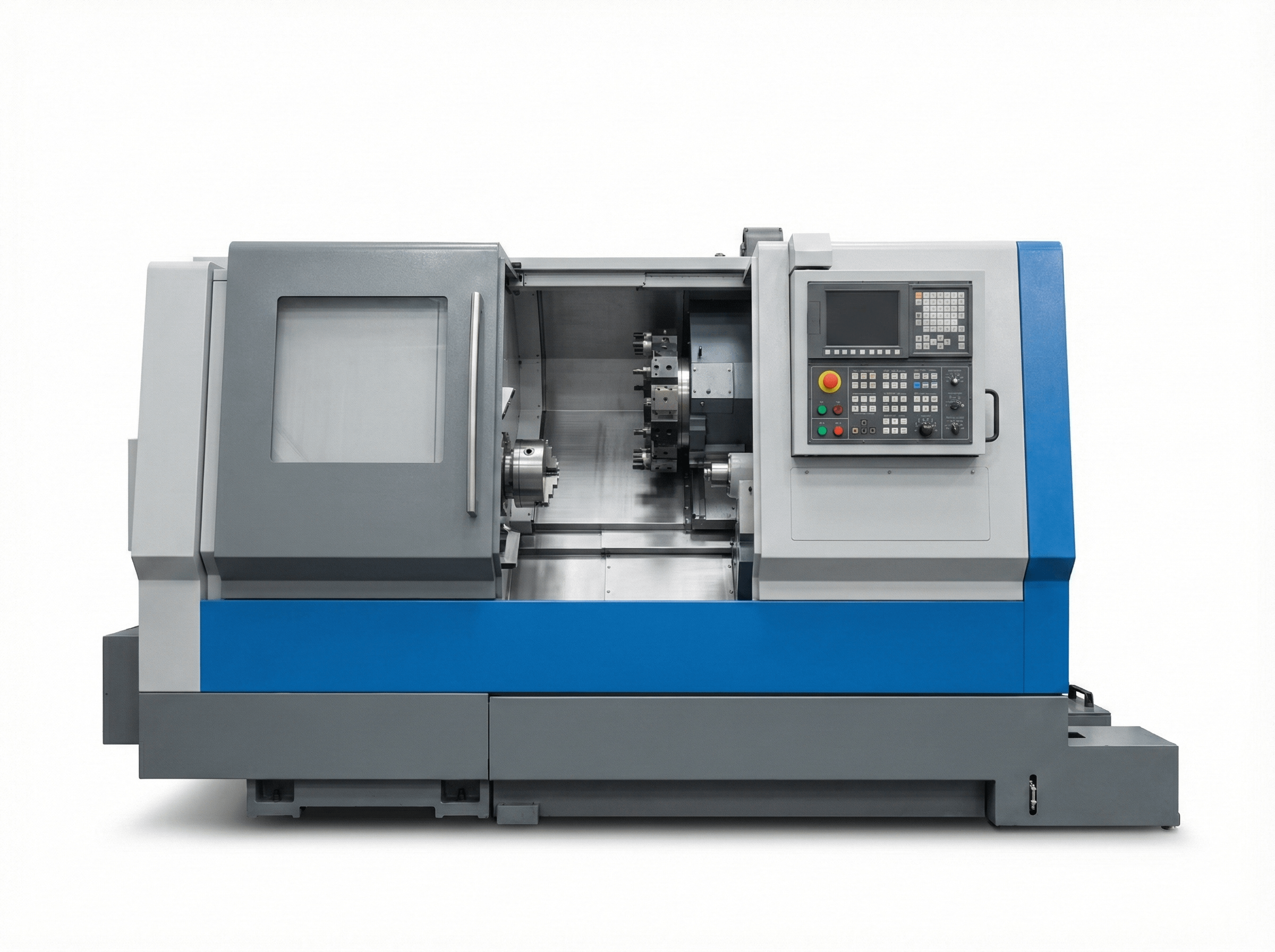
HANKOOK PROTURN 90/7000 CNC LATHE
HANKOOK · PROTURN 90/7000
Specifications & Market Value
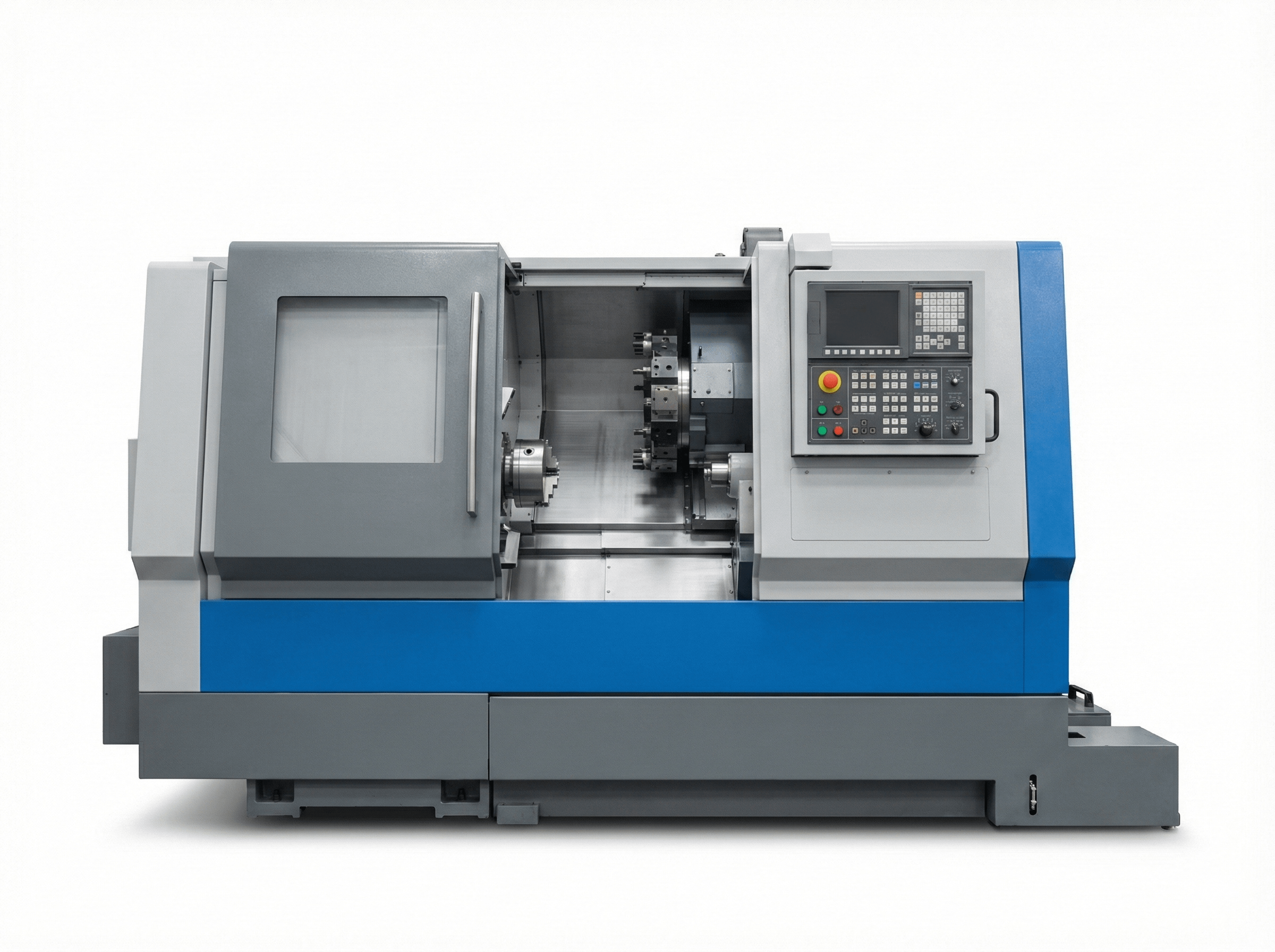
 Reference image
A 3-axis CNC control system is an automated machine tool control solution designed to manage motion and machining operations along three linear axes—typically X, Y, and Z. This configuration enables the precise positioning and movement of cutting tools relative to a workpiece, facilitating the production of complex geometries with high accuracy and repeatability. The CNC control unit interprets programmed instructions, commonly written in G-code, to coordinate the simultaneous movement of all three axes, allowing for intricate milling, drilling, and contouring operations. The system integrates a computerized numerical control kernel responsible for decoding, interpolating, and executing motion commands, while also managing auxiliary functions such as spindle control, coolant activation, and tool changes. 3-axis CNC systems typically employ closed-loop control, utilizing servo motors and feedback devices like encoders to continuously monitor and adjust the actual position of each axis, ensuring minimal deviation from the programmed path. This feedback mechanism enhances precision, compensates for potential errors, and maintains consistent machining quality. The control system interfaces with the machine’s drives and motors via a fieldbus, enabling real-time, deterministic communication for synchronized axis movement. Suitable for a wide range of industrial applications, including milling, routing, and engraving, 3-axis CNC controls are valued for their versatility, efficiency, and ability to automate complex machining tasks with minimal operator intervention.
Specifications, market trends, and valuation estimates are compiled from manufacturer documentation, historical sales, and industry sources. While care is taken to ensure accuracy, this information is provided for reference purposes only and may contain errors or omissions. Users should independently verify all data before making buying or selling decisions. Valuations do not represent guaranteed transaction prices or binding offers, and Aucto assumes no liability for decisions made using this data.
Spot an error or missing detail? Help us keep our equipment guides accurate for the community.

 A+
A+ Auction Value
$19,950
 Range$5,000 – $28,000
 Sells in ~ 30 days
 Retail Value
—
Sells in ~ 180 days
Item functions as originally intended, shows signs of normal wear. Change the condition to see how it moves both values.
Market Intelligence
HANKOOK · PROTURN 90/7000
GOODA · TH-1000NC
DN SOLUTIONS · LYNX 2600SY
FOLLOW · PKL210A
MAZAK · MULTIPLEX 6300Y
ACRA · FEL-E 28200
MAZAK · INTEGREX 100-IV S
AMERA SEIKI · S-36