FMB MERCURY HORIZONTAL BAND SAW
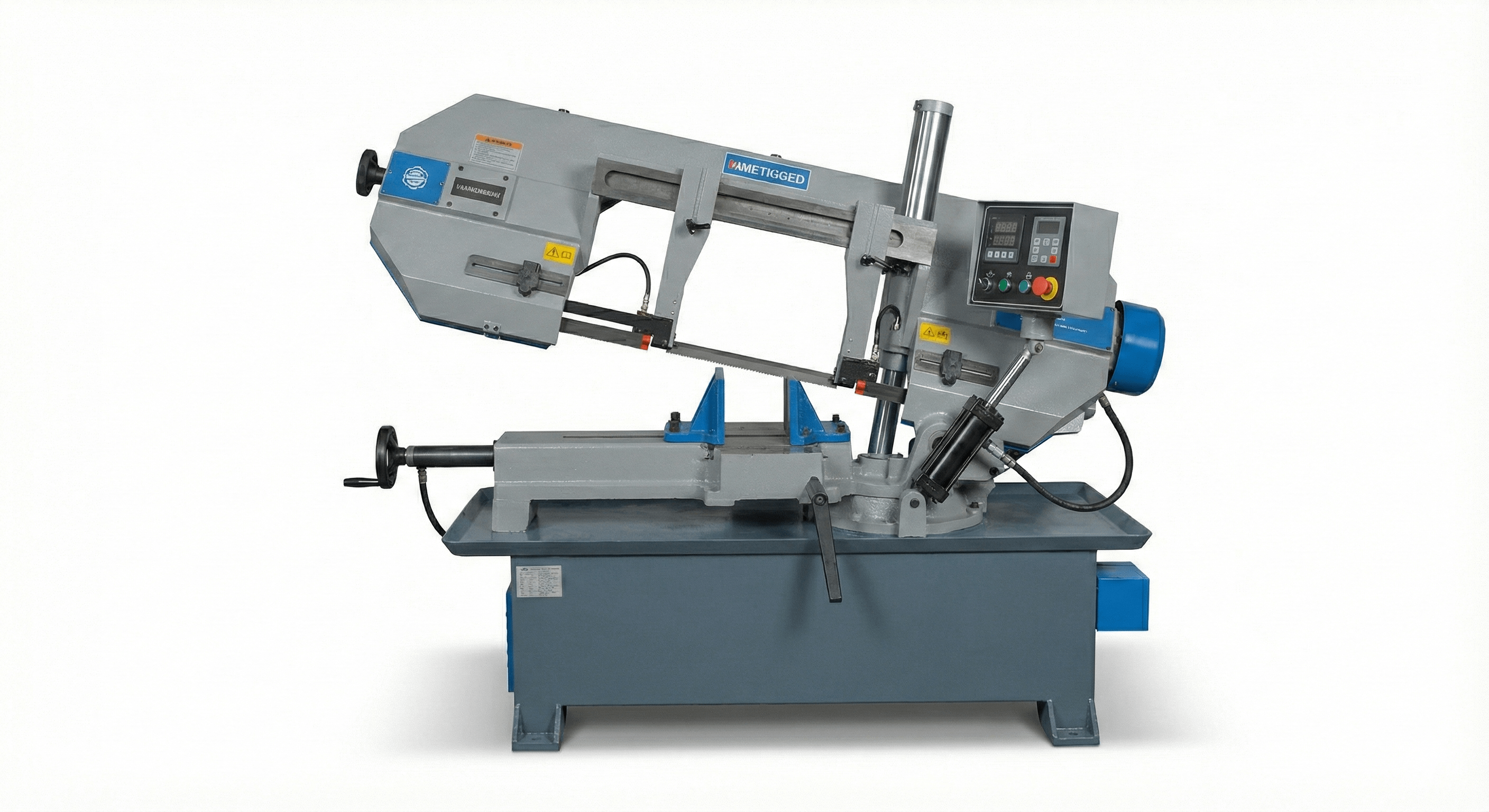
Equipment Overview
Share Link- OEM
- FMB
- Model
- MERCURY
- Year of Manufacture
- -
- Category
- HORIZONTAL BAND SAWS
Market Value Calculator
A+Technical Description
The FMB Mercury Horizontal Band Saw is a versatile semi-automatic/manual cutting solution designed for precision and efficiency in metalworking applications. With a rectangular capacity height of 12.0 inches and width of 14.5 inches, it accommodates a variety of materials, including rounds and squares up to 12.0 inches. Powered by a robust 2.0 hp motor, this band saw features a blade width of 1.0 inch and a thickness of 0.035 inches, ensuring durability and effective cutting performance. The blade length measures 135.0 inches, providing ample reach for various cutting tasks. The variable blade speed ranges from 52 to 394 feet per minute, allowing operators to adjust the cutting speed according to material type and thickness, or alternatively, a speed range of 52 to 328 FPM can be selected. The machine's footprint is compact at 39 inches by 67 inches, making it suitable for workshop environments with limited space. Weighing 1,425 pounds, the FMB Mercury is built for stability and longevity, ensuring consistent performance over time. This band saw is ideal for fabricators and manufacturers seeking a reliable and efficient cutting tool that combines manual control with semi-automatic features for enhanced productivity.
Technical Attributes
- Blade Length
- 135.0 ''
- Max Cutting Capacity (Round)
- 12.0 ''
- Material Feed Automation
- Semi-Automatic
- Blade Width
- 1.0 ''
- Rated Power
- 2.00 HP
- Control System
- Semi-automatic control system
Data Accuracy and Verification
Specifications and technical details are compiled from manufacturer documentation, historical records, and third-party industry sources. While care is taken to ensure accuracy, this information is provided for reference purposes only and may contain errors or omissions. Users should independently verify all details before relying on them.
If you identify any inaccuracies, please help us improve our data by reporting them here.