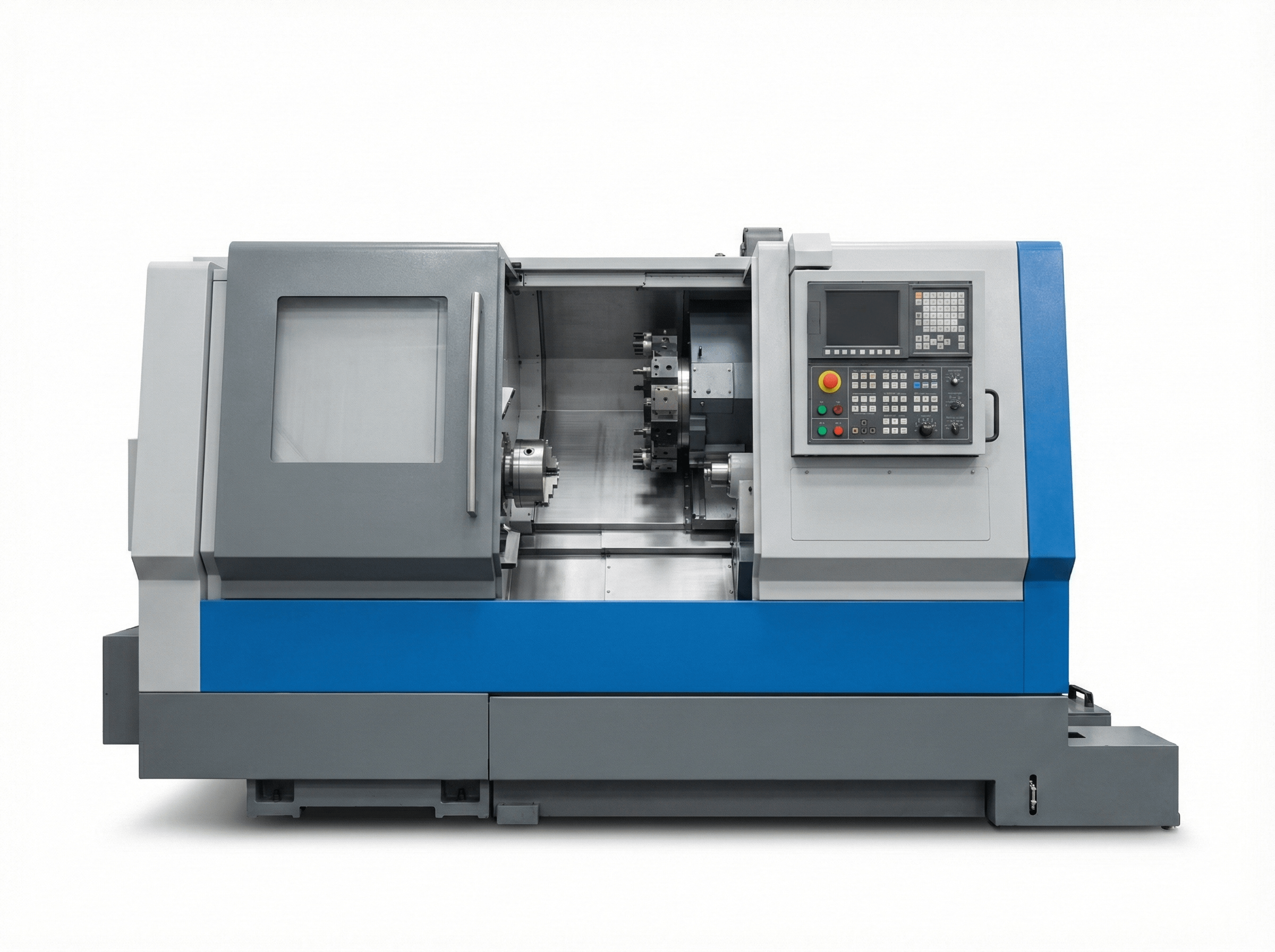
HANKOOK PROTURN 90/7000 CNC LATHE
HANKOOK · PROTURN 90/7000
Specifications & Market Value
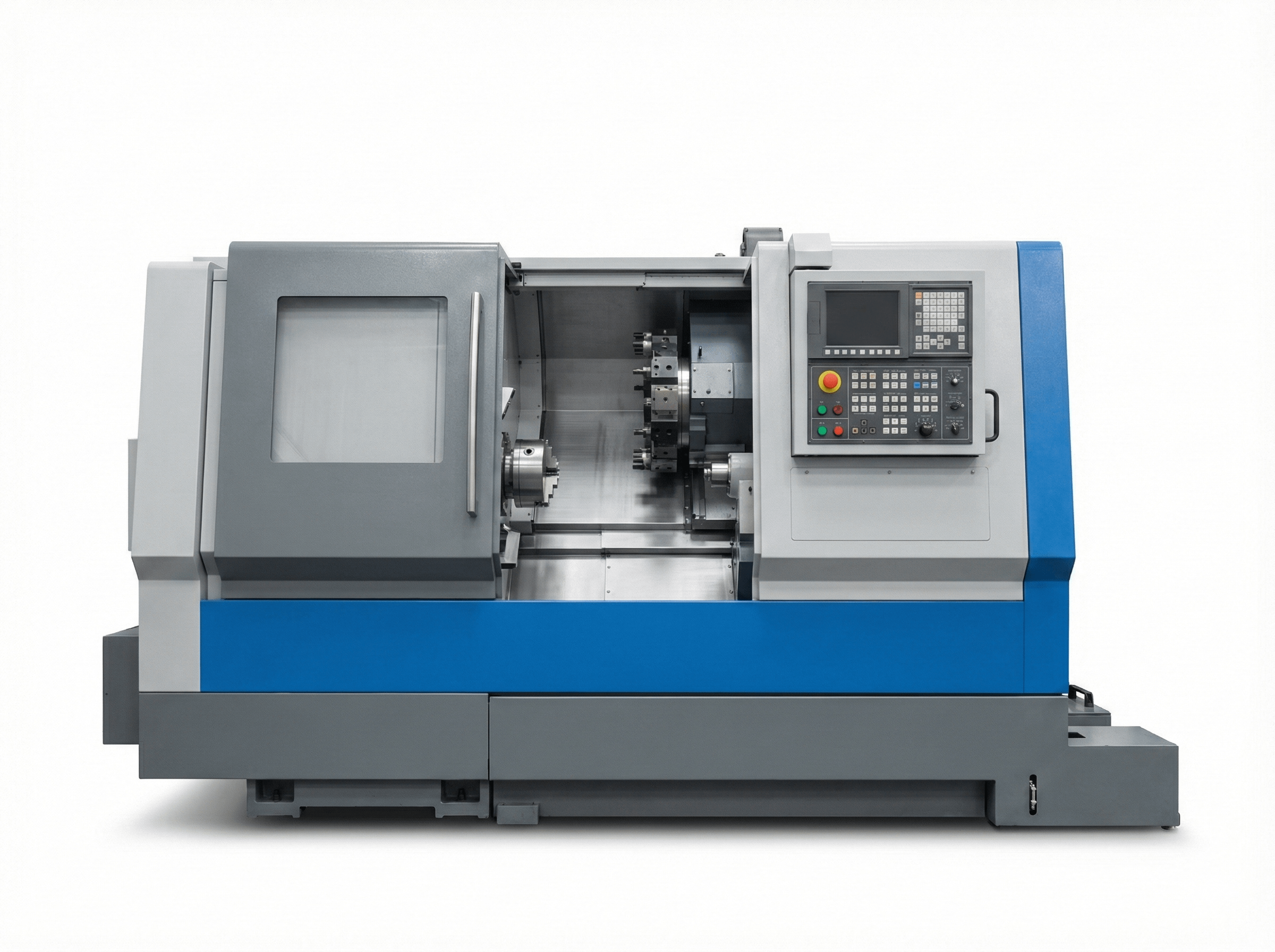
 Reference image
This CNC lathe features a 40-inch swing capacity and a machining length of 200 inches, making it suitable for large workpieces. It operates on 2 axes (X and Z) with a maximum turning diameter of 24.2 inches and a bar capacity of 7.09 inches. The machine is powered by a 39.9 hp motor, enabling a maximum spindle speed of 750 RPM, which supports efficient turning operations on medium to large diameter parts. It includes a tailstock for additional support during machining of longer shafts or bars. The lathe is controlled by a Fanuc 0iTF CNC system, which provides precise and automated control over the cutting process, enhancing part accuracy and repeatability. This setup is ideal for producing symmetrical cylindrical parts with consistent quality. The machine’s robust power and bar capacity accommodate heavy-duty turning tasks, while the CNC control permits programmable, repeatable operations ideal for batch production. Its combination of substantial swing, long machining length, and CNC precision makes it suitable for applications in automotive, aerospace, and industrial manufacturing where medium-to-large parts with moderate complexity are typical. The 2-axis configuration focuses on standard turning operations along the diameter and length of the workpiece, optimized for cost-effective production of turned components requiring reliability and accuracy.
Specifications, market trends, and valuation estimates are compiled from manufacturer documentation, historical sales, and industry sources. While care is taken to ensure accuracy, this information is provided for reference purposes only and may contain errors or omissions. Users should independently verify all data before making buying or selling decisions. Valuations do not represent guaranteed transaction prices or binding offers, and Aucto assumes no liability for decisions made using this data.
Spot an error or missing detail? Help us keep our equipment guides accurate for the community.

 A+
A+ Auction Value
$20,272
 Range$5,000 – $28,495
 Sells in ~ 30 days
 Retail Value
—
Sells in ~ 180 days
Item functions as originally intended, shows signs of normal wear. Change the condition to see how it moves both values.
Market Intelligence
HANKOOK · PROTURN 90/7000
GOODA · TH-1000NC
DN SOLUTIONS · LYNX 2600SY
FOLLOW · PKL210A
MAZAK · MULTIPLEX 6300Y
ACRA · FEL-E 28200
MAZAK · INTEGREX 100-IV S
AMERA SEIKI · S-36