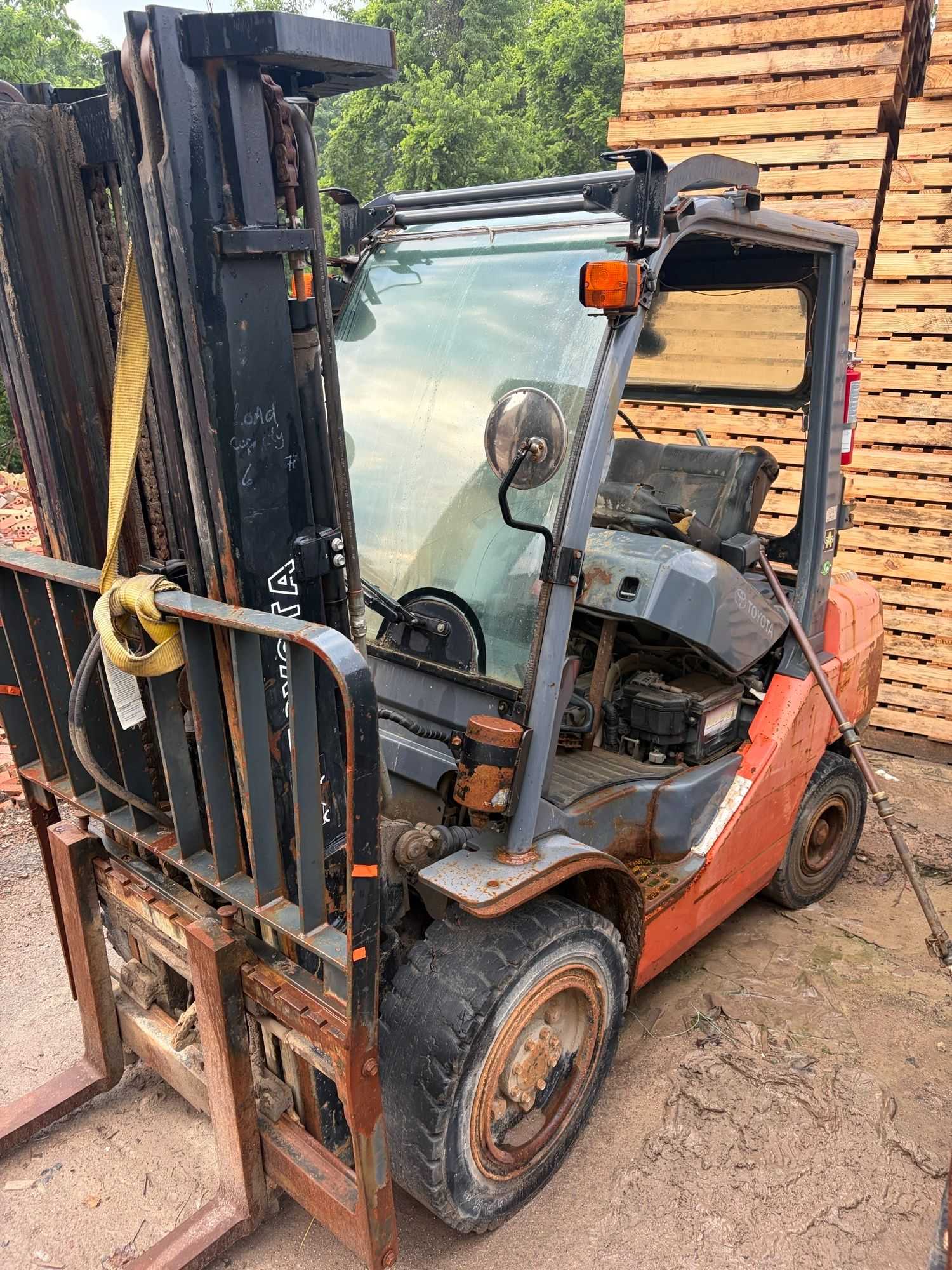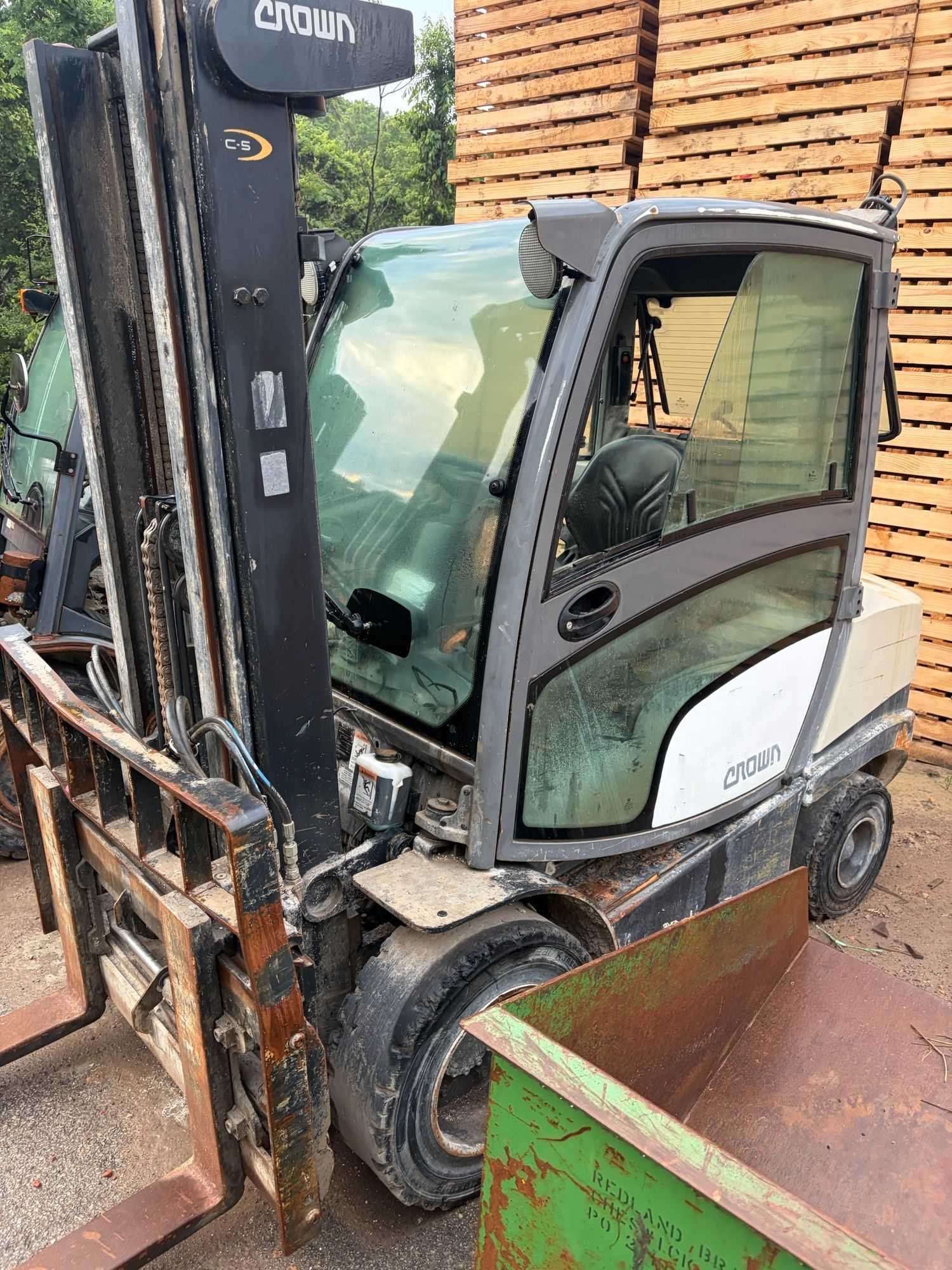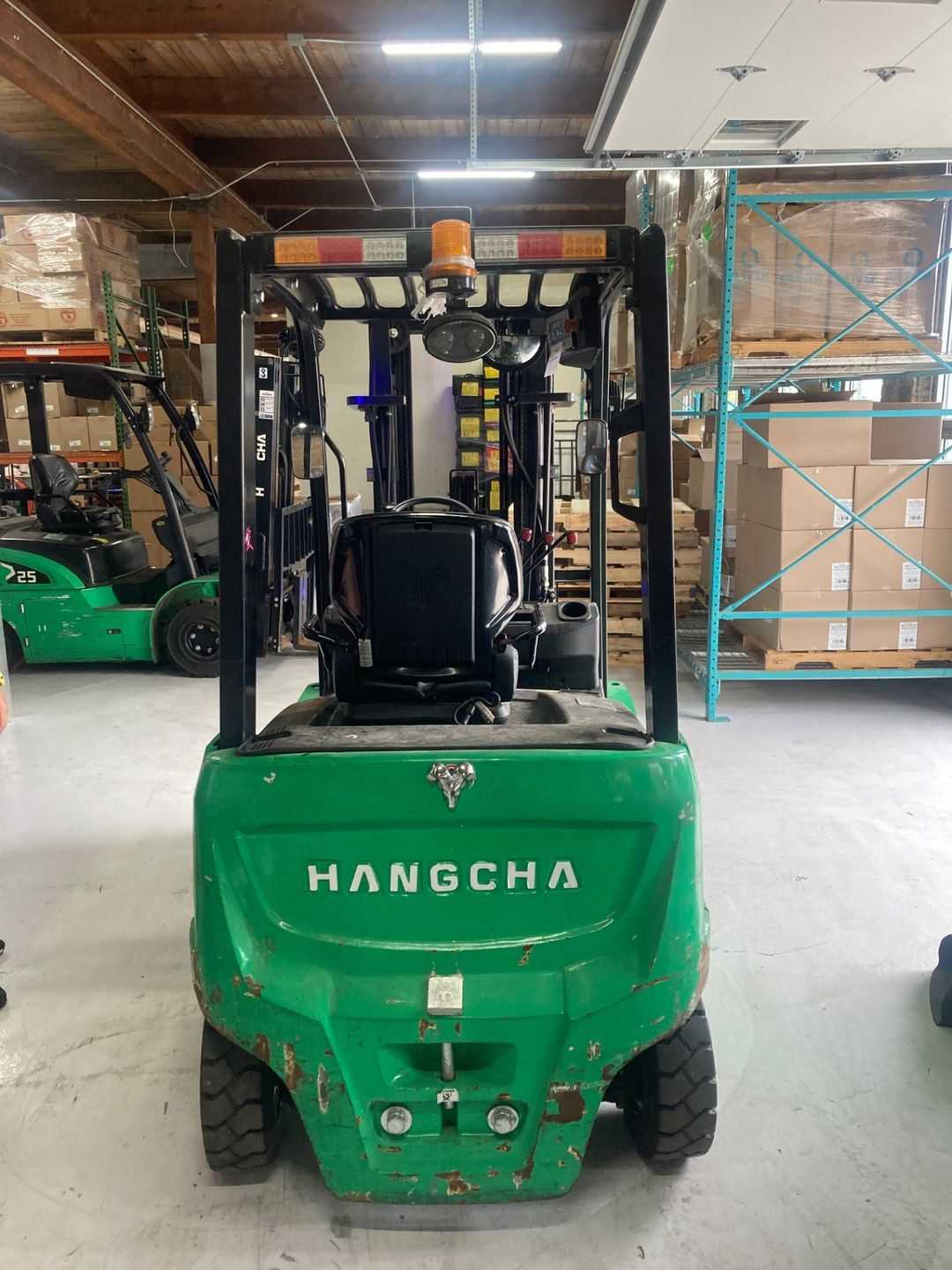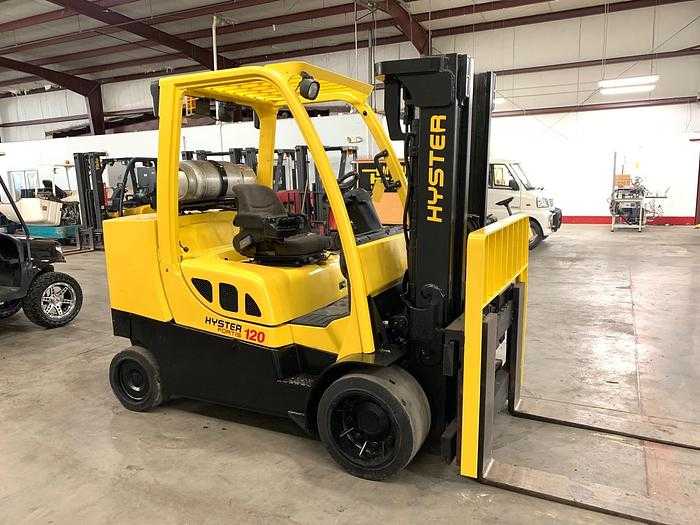
Buy Now
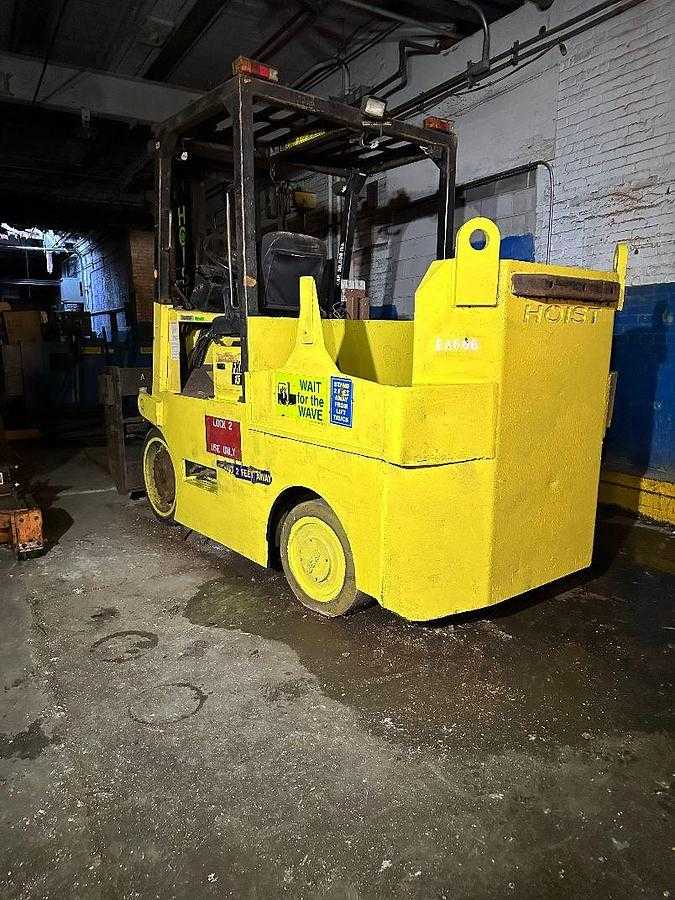
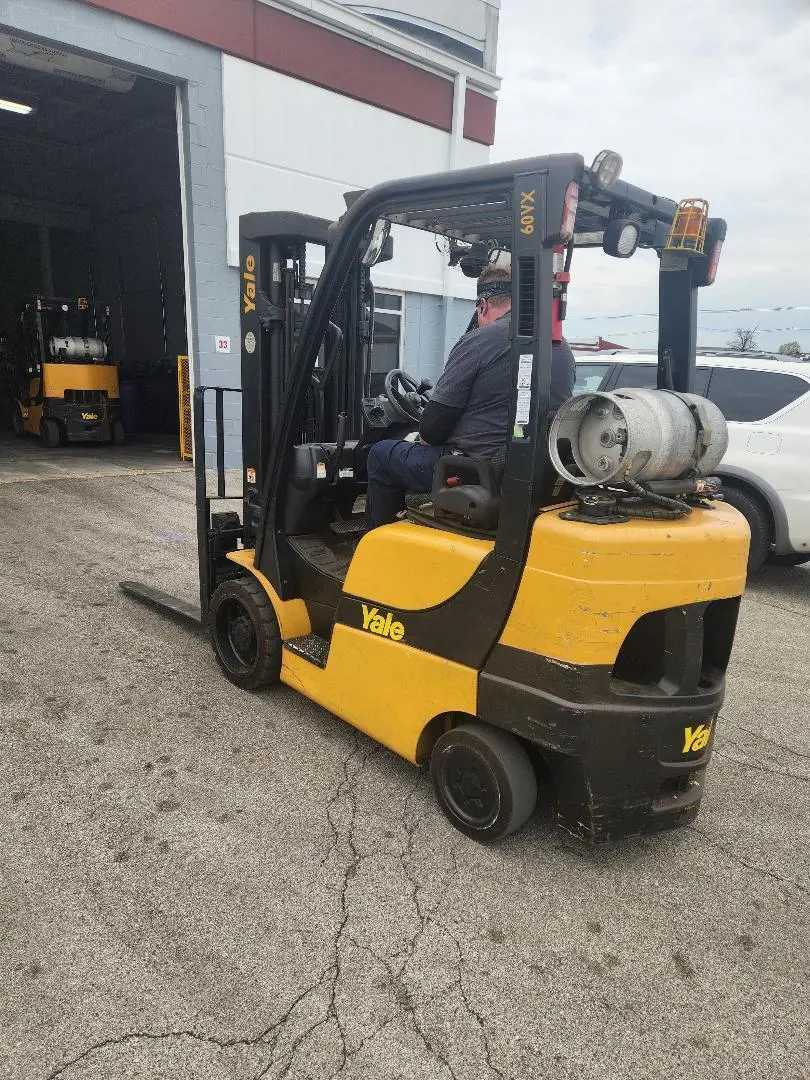
2015 YALE GLC060VXNVSE085 FORKLIFT, 5500LBS LIFT, LPG, 3 STAGE MAST, 48IN FORKS
$18,500
$307/moKentucky
Specifications & Market Value
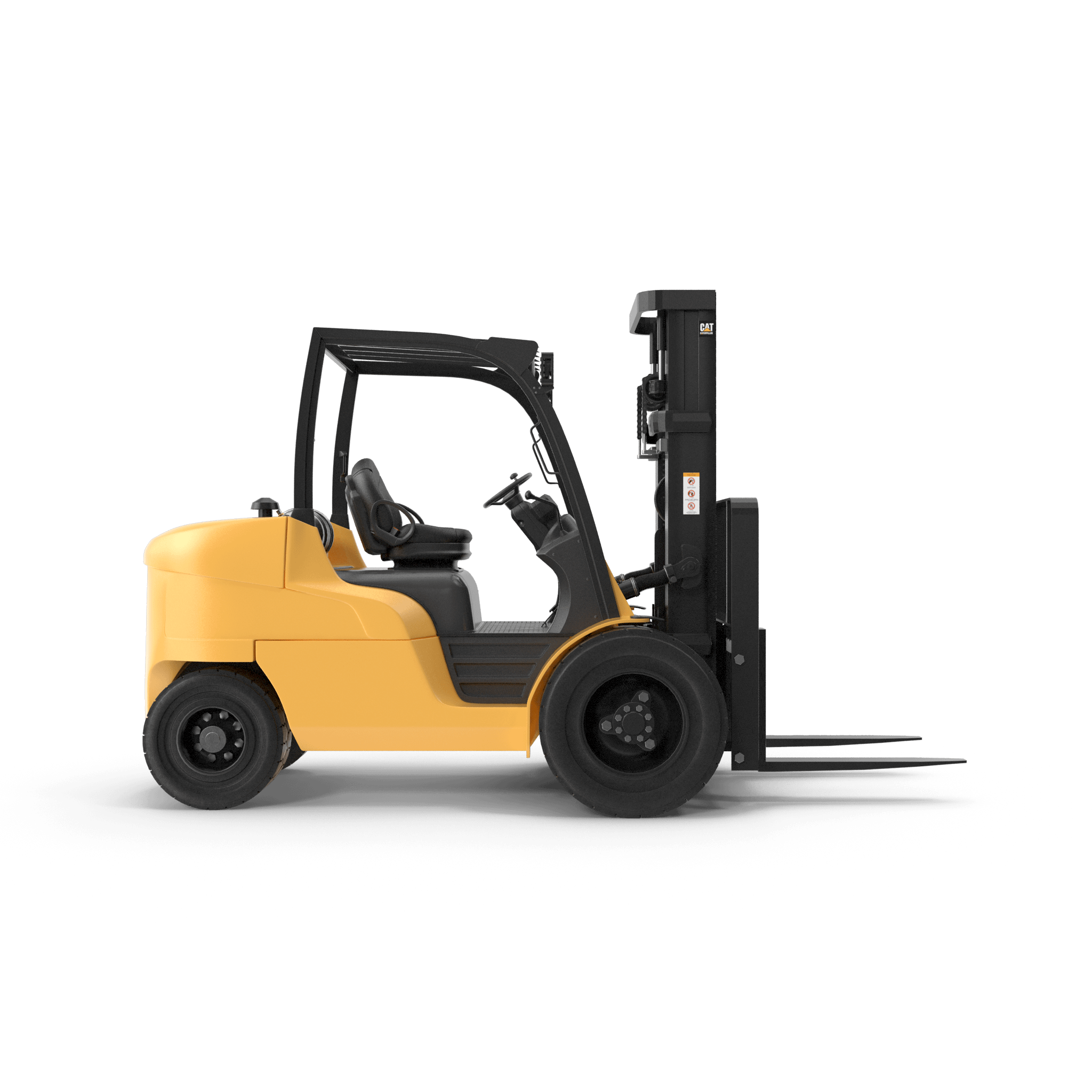
 Reference image
The Nissan PF60 forklift is a heavy-duty industrial vehicle designed for robust material handling with a **load capacity of 5,996.6 lbs** and a maximum fork height of **10.9 feet**, ideal for lifting and stacking in warehouses or yards. It features a powerful Nissan MUGIF230JV/LV/DV engine with a displacement of **151.8 cubic inches**, delivering **62.9 horsepower at 2,700 rpm** and a torque of **138.7 lb-ft at 1,600 rpm**, providing strong and efficient performance for demanding operations. The forklift operates at a maximum speed of **12.1 mph (19 kph)** and boasts a gradeability of **28%**, enabling it to handle inclines effectively. Dimensionally, the PF60 has an overall width of **3.4 feet**, a length to fork face of **8.8 feet**, and a height to the top of the overhead guard of **7.1 feet**, ensuring good maneuverability in tight spaces, with a turning radius of **7.6 feet**. The forklift’s wheelbase measures **5.6 feet**, and ground clearance is **5.8 inches**, suitable for various industrial terrains. It has a pneumatic tire setup with two front and two rear wheels, which enhances traction and stability on rough surfaces. The mast offers a lift speed of **104.3 ft/min** with a load center of **23.7 inches**, providing balanced lifting capacity and operational efficiency. The forks measure **42.2 inches in length**, **2 inches in thickness**, and **5 inches in width**, designed to securely handle diverse loads. With an operating weight of **9,265 lbs**, the Nissan PF60 combines power, stability, and precision for reliable forklift operation in heavy-duty applications.
Specifications, market trends, and valuation estimates are compiled from manufacturer documentation, historical sales, and industry sources. While care is taken to ensure accuracy, this information is provided for reference purposes only and may contain errors or omissions. Users should independently verify all data before making buying or selling decisions. Valuations do not represent guaranteed transaction prices or binding offers, and Aucto assumes no liability for decisions made using this data.
Spot an error or missing detail? Help us keep our equipment guides accurate for the community.

 A+
A+ Auction Value
$6,753
 Range$1,000 – $9,850
 Sells in ~ 30 days
 Retail Value
—
Sells in ~ 180 days
Item functions as originally intended, shows signs of normal wear. Change the condition to see how it moves both values.
| Attribute | SelectedNISSAN PF60 SIT-DOWN FORKLIFT | NISSAN PF70 SIT-DOWN FORKLIFT | |
|---|---|---|---|
| OEM | NISSAN | NISSAN | |
| Model | PF60 | PF70 | |
| Year | - | - | |
| Load Capacity | 5997 lb | 7000 lb | |
| Turning Radius | 7.60 ft | 7.90 ft | |
| Max Fork Height | 130.80 '' | 130.80 '' | |
| Similarity | — | 99% | |
| Auction Value$1,000 - $9,850Retail Value— | Auction Value$2,500 - $12,950Retail Value— | |
| Current Machine | View Details |
Marketplace