WIM HMF3020 HORIZONTAL MACHINING CENTER
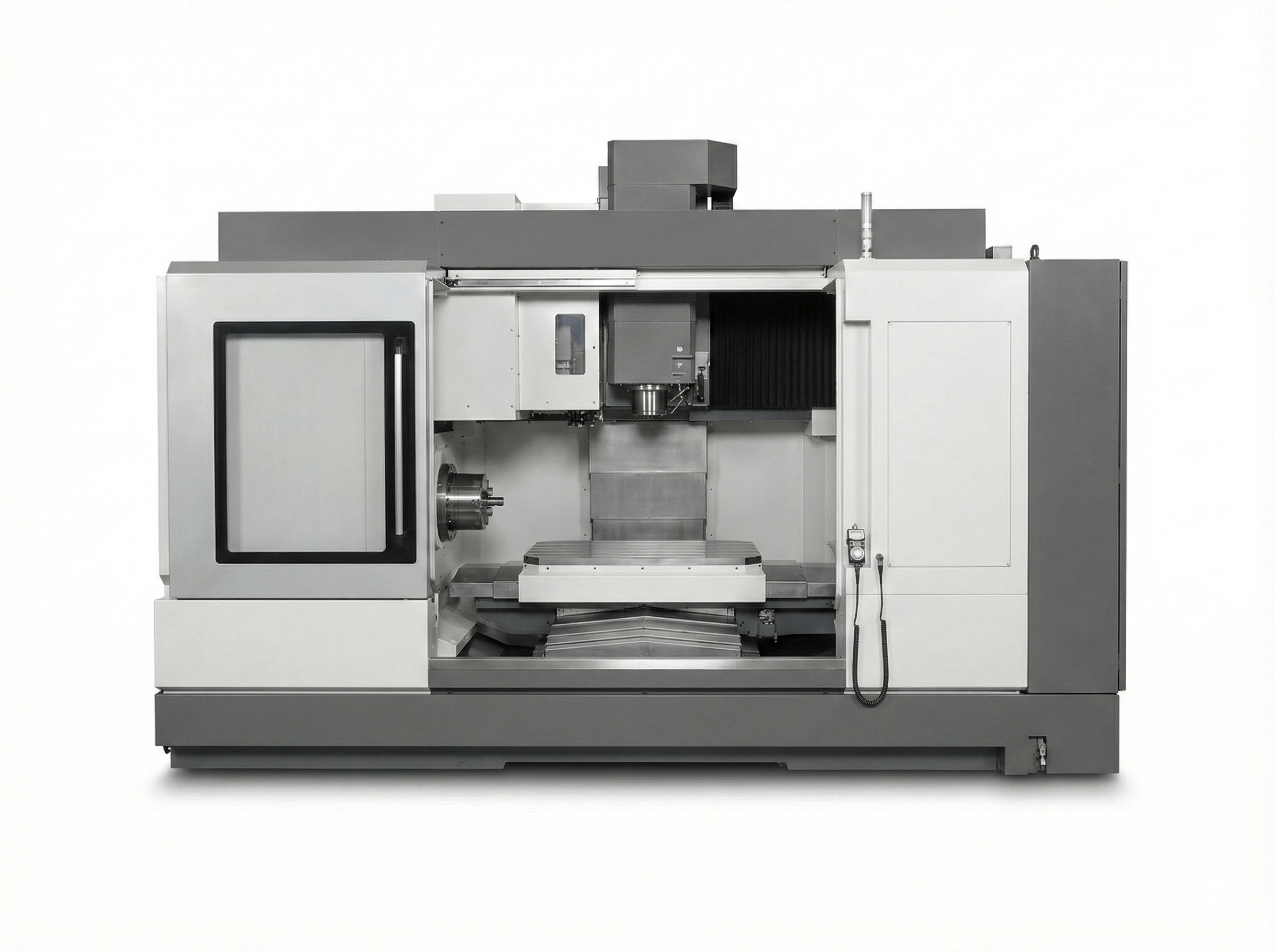
Equipment Overview
Share Link- OEM
- WIM
- Model
- HMF3020
- Year of Manufacture
- -
- Category
- HORIZONTAL MACHINING CENTERS
Market Value Calculator
A+Technical Description
The WIM HMF3020 Horizontal Machining Center is a high-performance CNC machine designed for demanding milling and boring applications. It features an X-axis travel of 118.11 inches (3,000 mm), a Y-axis travel of 78.74 inches (2,000 mm), and a Z-axis travel of 39.37 inches (1,000 mm), providing extensive work envelope capabilities for large and complex parts. The machine is equipped with a robust spindle delivering a maximum speed of 4,000 RPM and a BT50 taper, ensuring compatibility with a wide range of tooling for high-precision machining. The worktable measures 137.8 inches (3,500 mm) in length and 62.992 inches (1,600 mm) in width, supporting heavy workpieces with a maximum loading capacity of up to 30 tons. The HMF3020 is powered by a 40.2 horsepower motor, providing ample torque for efficient material removal across various metals and alloys. Control is managed by the advanced Fanuc 0i-MF CNC system, offering reliable operation, intuitive programming, and seamless integration with modern manufacturing workflows. The machine also includes a full guard, lubricating system, coolant system, pneumatic system, leveling screws, and a data server for enhanced productivity and maintenance. With a rapid traverse rate of 10 m/min on the X, Y, and Z axes, and a quill diameter/travel of Φ130/700 mm, the HMF3020 delivers fast, accurate, and repeatable performance. Its robust construction, high load capacity, and comprehensive feature set make it ideal for heavy-duty industrial applications requiring precision, reliability, and versatility.
Technical Attributes
- Control System
- FANUC 0I MF
- Max Spindle Speed
- 6,000.00
- Y-Axis Travel
- 47.24 ''
- Z-Axis Travel
- 33.47 ''
- Table Size (LxW)
- 66.929 x 47.244
- X-Axis Travel
- 59.06 ''
- Spindle Power
- 24.80 HP
- Spindle Taper
- BT 50
Data Accuracy and Verification
Specifications and technical details are compiled from manufacturer documentation, historical records, and third-party industry sources. While care is taken to ensure accuracy, this information is provided for reference purposes only and may contain errors or omissions. Users should independently verify all details before relying on them.
If you identify any inaccuracies, please help us improve our data by reporting them here.