FRYER TC-320D HORIZONTAL MACHINING CENTER
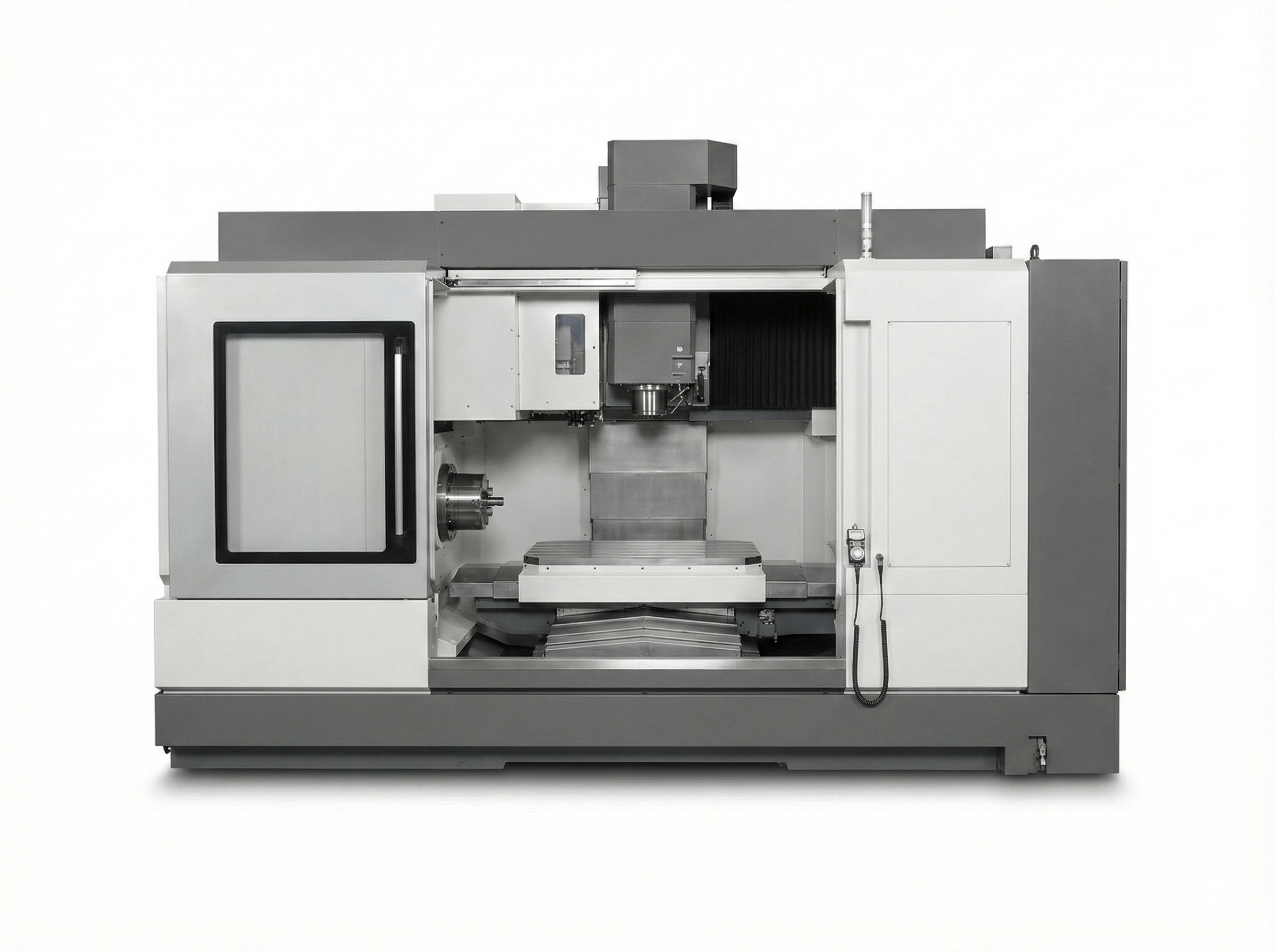
Equipment Overview
Share Link- OEM
- FRYER
- Model
- TC-320D
- Year of Manufacture
- -
- Category
- HORIZONTAL MACHINING CENTERS
Market Value Calculator
A+Technical Description
The Fryer TC-320D Horizontal Machining Center features an extensive X-axis travel of 280 inches, complemented by Y and Z-axis travels of 24 inches each, enabling large workpiece machining with precise multi-axis control. It is equipped with the Fryer Siemens TOUCH 2100 CNC control system, a Compact Digital Control System (DCS) integrating spindle drive, axis drive, and CPU digitally. This advanced controller offers highly accurate linear and circular interpolation, powerful pre-programmed machining cycles, and tool life management for efficient production. The Touch 2100 system supports intuitive conversational programming with automatic geometry calculation, significantly reducing setup time and programming complexity. Its regenerative drive system minimizes electrical consumption while maintaining ultra-reliable performance with a mean time between failures of 15 years. The machine’s AC brushless digital motors provide precise motion control, with absolute encoders retaining position data even after power interruptions. The spindle motor accelerates rapidly, reaching up to 10,000 RPM within one second, facilitating high-speed machining operations. The Fryer TC-320D, combined with the Siemens TOUCH 2100 CNC, is designed for maximum productivity and flexibility, offering modular upgrades and solid model verification to meet evolving manufacturing needs efficiently. This horizontal machining center is suitable for large-scale, precise machining tasks requiring robust control and expansive travel capacity.
Technical Attributes
- Control System
- FRYER SIEMENS TOUCH 2100
- Spindle Power
- 40.00 HP
- Table Size (LxW)
- 320 x 24
- Y-Axis Travel
- 24.00 ''
- Max Spindle Speed
- 6,000.00
- Z-Axis Travel
- 24.00 ''
- X-Axis Travel
- 320.00 ''
Data Accuracy and Verification
Specifications and technical details are compiled from manufacturer documentation, historical records, and third-party industry sources. While care is taken to ensure accuracy, this information is provided for reference purposes only and may contain errors or omissions. Users should independently verify all details before relying on them.
If you identify any inaccuracies, please help us improve our data by reporting them here.