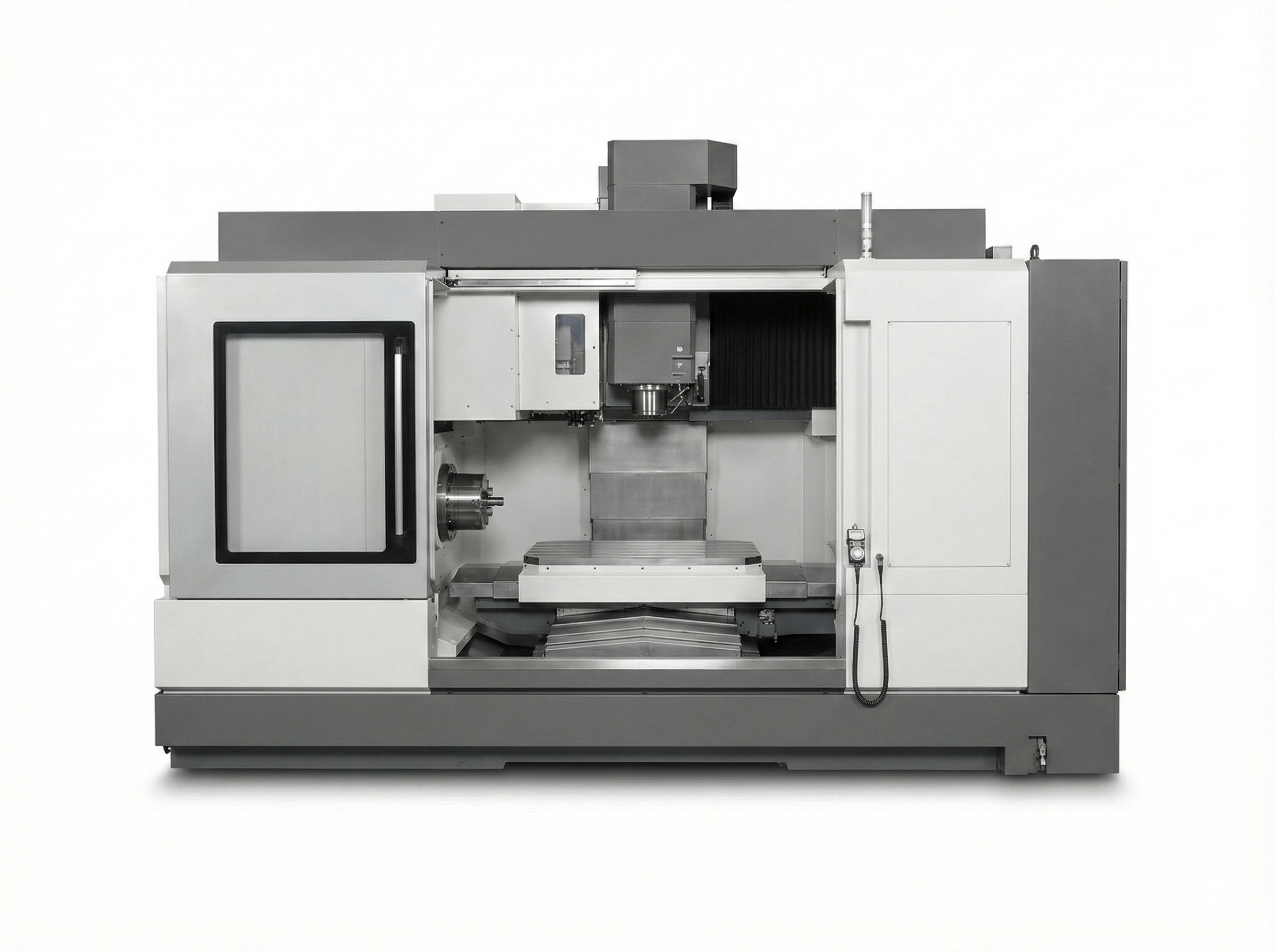
KENT CNC, A DIVISION OF KENT INDUSTRIAL USA INC. KLM-300Y HORIZONTAL MACHINING CENTER
Equipment Overview
Share Link- OEM
- KENT CNC, A DIVISION OF KENT INDUSTRIAL USA INC.
- Model
- KLM-300Y
- Year of Manufacture
- -
- Category
- HORIZONTAL MACHINING CENTERS
Market Value Calculator
A+Technical Description
The KENT CNC KLM-300Y Horizontal Machining Center, a division of Kent Industrial USA Inc., is a high-performance multitasking machine designed for precision and efficiency in demanding production environments. Featuring a robust horizontal spindle configuration, it offers a maximum turning diameter of 19.000", a maximum turning length of 24.000", and a main spindle chuck diameter of 10.000", supporting a maximum bar diameter of 3.000". The machine is equipped with a single main spindle capable of speeds up to 3,500 RPM and 20 HP power, ensuring strong cutting performance and versatility. The primary tool carrier is APT/VDI, accommodating up to 12 turning tools and 12 rotary tools, with simultaneous cutting capability for one tool. Rotary tools deliver up to 4.00 HP and 4,000 RPM, enabling advanced milling and drilling operations. The KLM-300Y operates on a 4-axis system with X-axis travel of 11.000", Y-axis travel up to 2.000" (optional), and Z-axis travel of 30.000". All axes feature a maximum feed rate and rapid traverse of 79 ipm, providing fast and accurate movement for improved productivity. The machine’s rigid construction, precision-ground box ways, and certified Meehanite casting ensure superior stability, dampening, and long-term accuracy. With programmable hydraulic tailstock, auto-lubrication system, and Fanuc 0i-TF CNC control, the KLM-300Y delivers reliable, high-precision machining for complex parts in a compact footprint.
Technical Attributes
- X-Axis Travel
- 11.00 ''
- # of Axes
- 4.00
- Z-Axis Travel
- 30.00 ''
- Max Spindle Speed
- 3,500.00
- Spindle Power
- 20.00 HP
- Y-Axis Travel
- 0.00 ''
Data Accuracy and Verification
Specifications and technical details are compiled from manufacturer documentation, historical records, and third-party industry sources. While care is taken to ensure accuracy, this information is provided for reference purposes only and may contain errors or omissions. Users should independently verify all details before relying on them.
If you identify any inaccuracies, please help us improve our data by reporting them here.