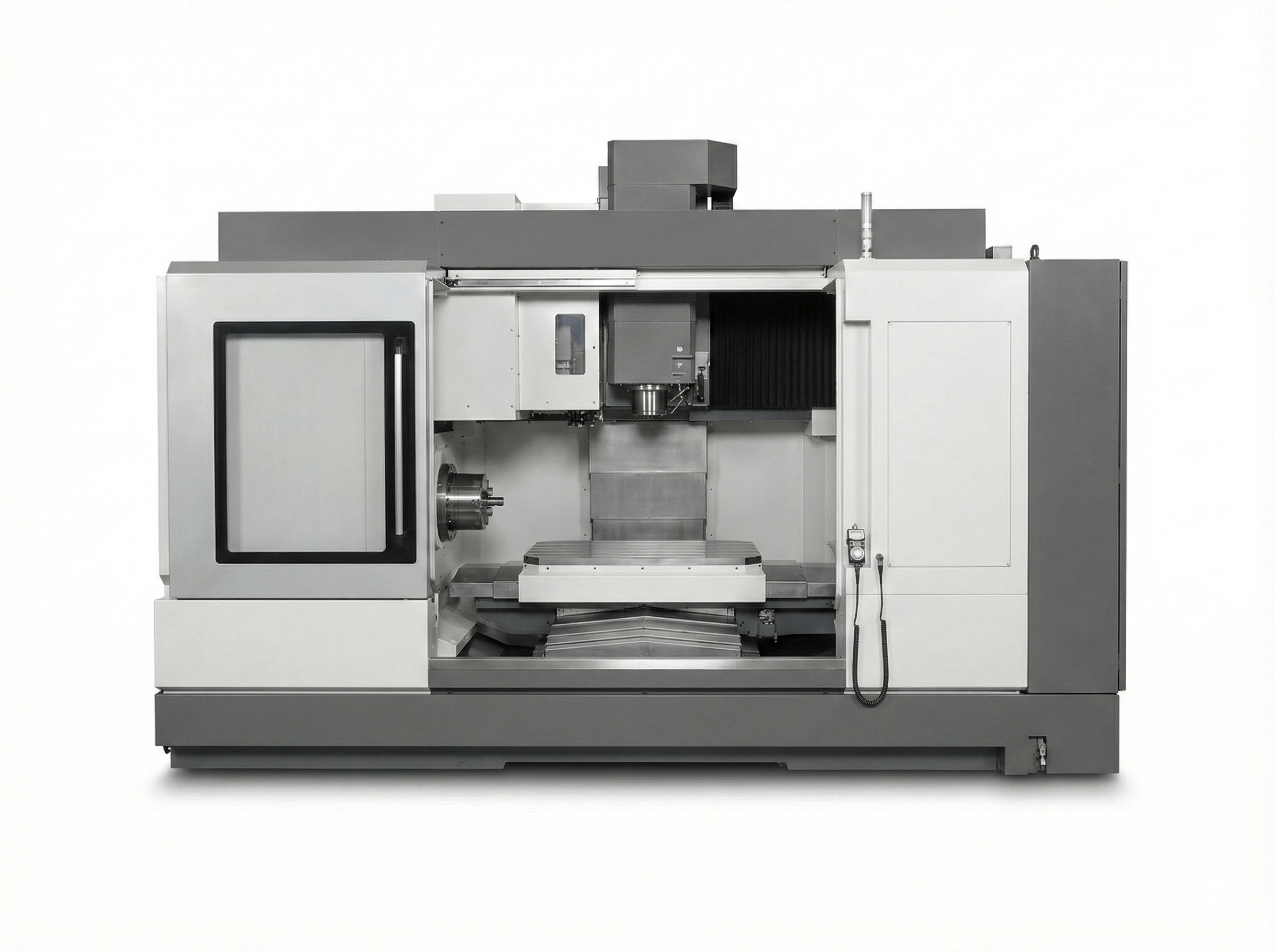
KNUTH FORCETURN XL 52280 HORIZONTAL MACHINING CENTER
Equipment Overview
Share Link- OEM
- KNUTH
- Model
- FORCETURN XL 52280
- Year of Manufacture
- -
- Category
- HORIZONTAL MACHINING CENTERS
Market Value Calculator
A+Technical Description
The KNUTH FORCETURN XL 52280 is a heavy-duty horizontal machining center engineered for large-scale workpiece processing. Featuring a maximum turning diameter of 51 inches and an extended turning length of 283 inches, this machine accommodates substantial cylindrical components. The center is equipped with a primary spindle operating at 800 RPM with a standard 28 horsepower output, expandable to 42 horsepower for demanding applications. A secondary spindle provides identical specifications, enabling simultaneous dual-spindle operations for enhanced productivity. The machine supports two concurrent cutting tools, allowing efficient multi-operation machining sequences without tool changeovers. The Z-axis travel measures 276 inches, providing substantial vertical working envelope for complex part geometries. This configuration makes the FORCETURN XL 52280 particularly suitable for precision turning and milling operations on large forgings, castings, and industrial components. The dual-spindle architecture facilitates back-end operations and simultaneous machining on multiple surfaces, significantly reducing cycle times. The high power output combined with the extended work envelope and dual-tool capability positions this machine for production environments requiring versatile heavy-part machining with minimal setup and changeover time.
Technical Attributes
- Max Spindle Speed
- 800.00 RPM
- Z-Axis Travel
- 276.00 ''
- Spindle Power
- 28.00 HP
Data Accuracy and Verification
Specifications and technical details are compiled from manufacturer documentation, historical records, and third-party industry sources. While care is taken to ensure accuracy, this information is provided for reference purposes only and may contain errors or omissions. Users should independently verify all details before relying on them.
If you identify any inaccuracies, please help us improve our data by reporting them here.