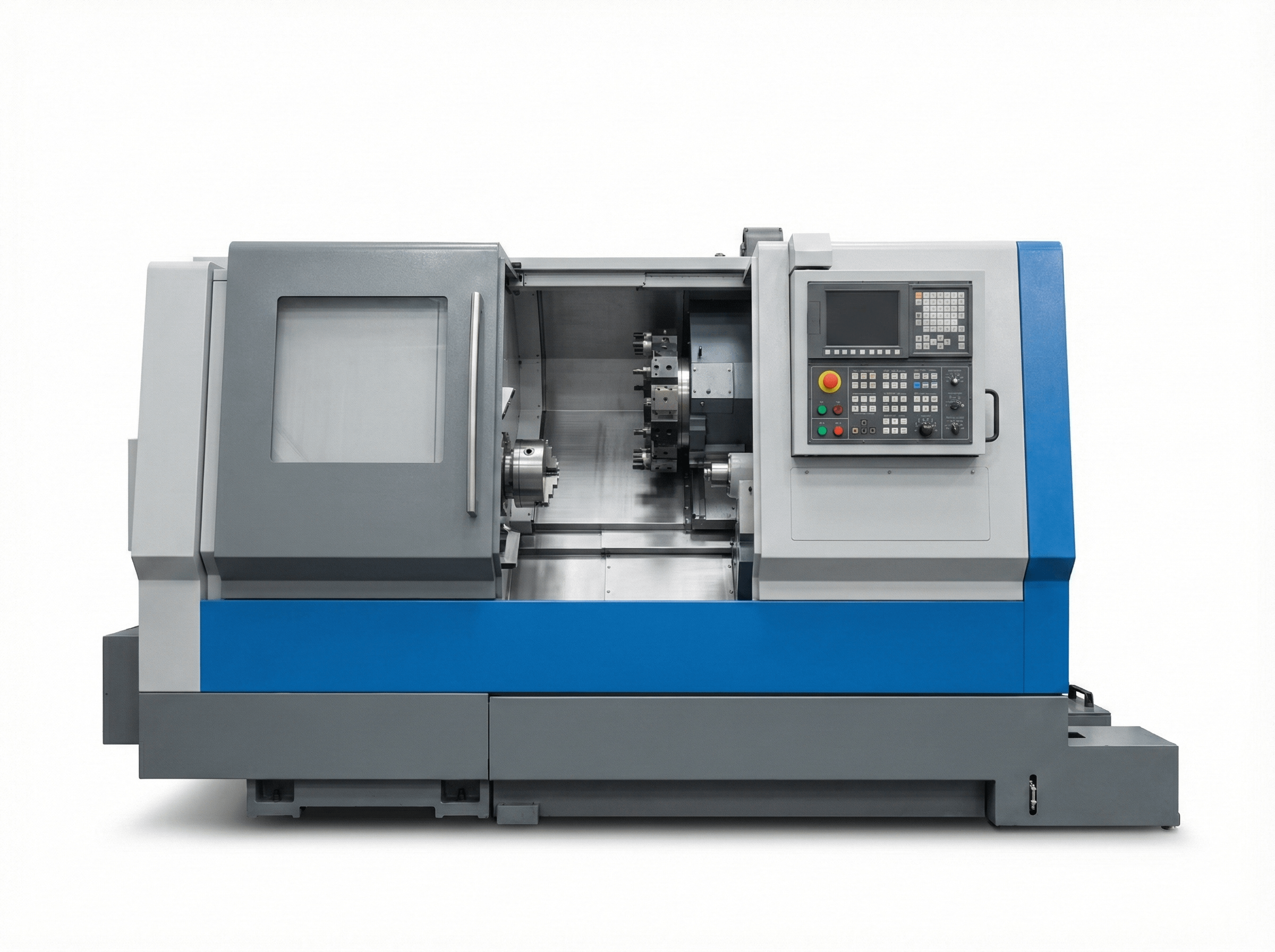
HANKOOK PROTURN 90/7000 CNC LATHE
HANKOOK · PROTURN 90/7000
Specifications & Market Value
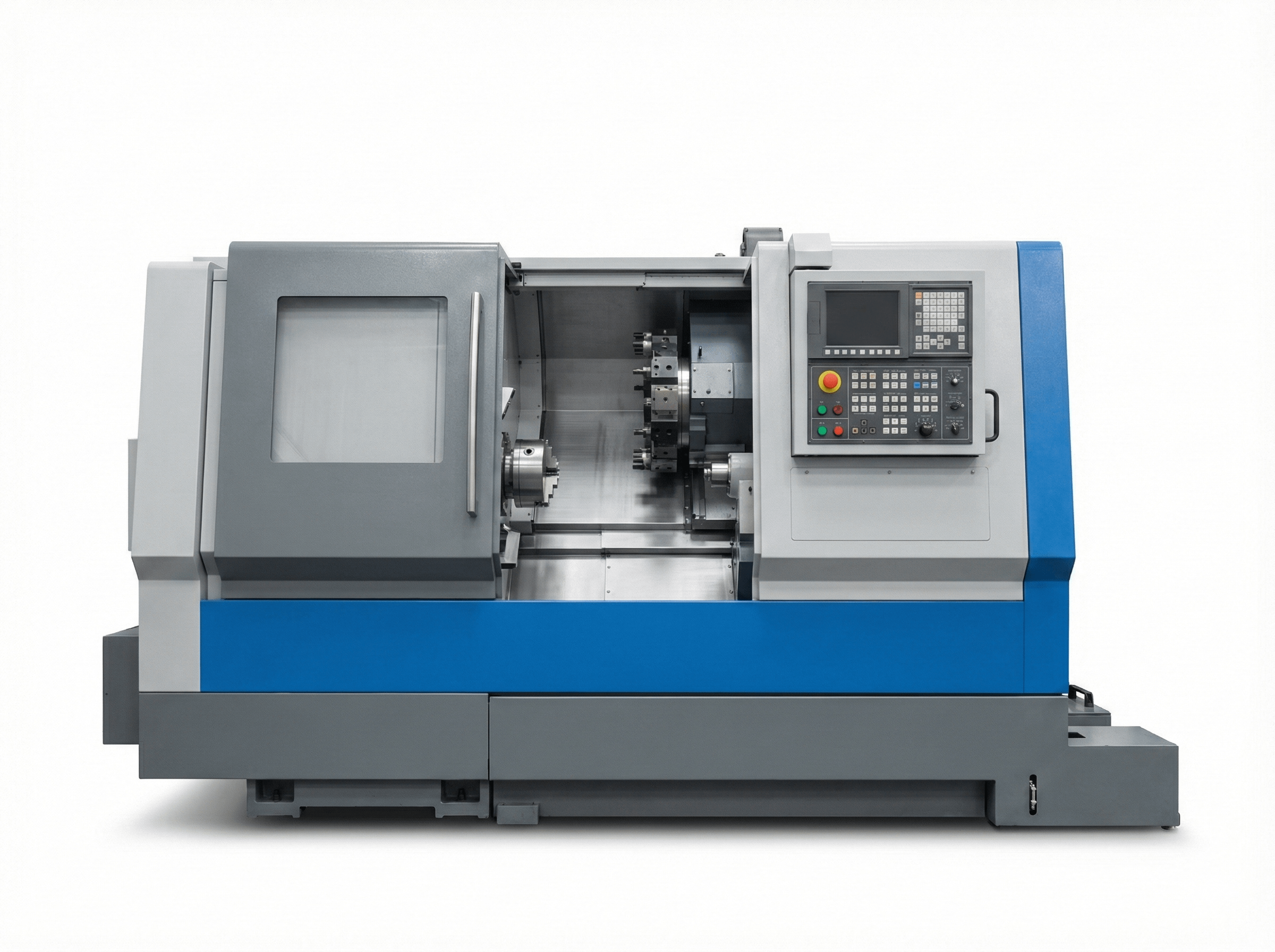
 Reference image
This CNC lathe is equipped with a Fanuc 0i-TD control system, providing reliable and precise operation for demanding turning applications. The machine features a 24-inch chuck, a swing of 40.55 inches, and a turning diameter of 35.43 inches, supporting workpieces up to 76.77 inches in center distance. The spindle bore measures 14.37 inches, allowing for large bar stock processing. Axis travel is 18.50 inches on the X-axis and 76.77 inches on the Z-axis, with rapid traverse rates of 472 IPM (X) and 709 IPM (Z), ensuring efficient tool movement. The main spindle delivers 300 RPM and is powered by a robust 60 HP motor generating 4,881 ft-lbs of torque for heavy-duty cutting. The turret holds up to 12 tools, and the machine includes a tailstock for enhanced workholding flexibility. With two controlled axes (X and Z), the Fanuc 0i-TD control supports simultaneous axis movement, digital servo functions, backlash compensation, and programmable feed and rapid traverse rates. The system also offers standard safety features, emergency stop, axis interlocks, and stored stroke checks. The lathe measures 284.1 inches in length, 108.7 inches in width, and 102.3 inches in height, weighing 44,092 pounds. With 1,612 machine hours, this unit is well-suited for high-precision, high-volume production environments.
Specifications, market trends, and valuation estimates are compiled from manufacturer documentation, historical sales, and industry sources. While care is taken to ensure accuracy, this information is provided for reference purposes only and may contain errors or omissions. Users should independently verify all data before making buying or selling decisions. Valuations do not represent guaranteed transaction prices or binding offers, and Aucto assumes no liability for decisions made using this data.
Spot an error or missing detail? Help us keep our equipment guides accurate for the community.

 A+
A+ Auction Value
$45,425
 Range$10,000 – $64,500
 Sells in ~ 30 days
 Retail Value
—
Sells in ~ 180 days
Item functions as originally intended, shows signs of normal wear. Change the condition to see how it moves both values.
Market Intelligence
HANKOOK · PROTURN 90/7000
GOODA · TH-1000NC
DN SOLUTIONS · LYNX 2600SY
FOLLOW · PKL210A
MAZAK · MULTIPLEX 6300Y
ACRA · FEL-E 28200
MAZAK · INTEGREX 100-IV S
AMERA SEIKI · S-36