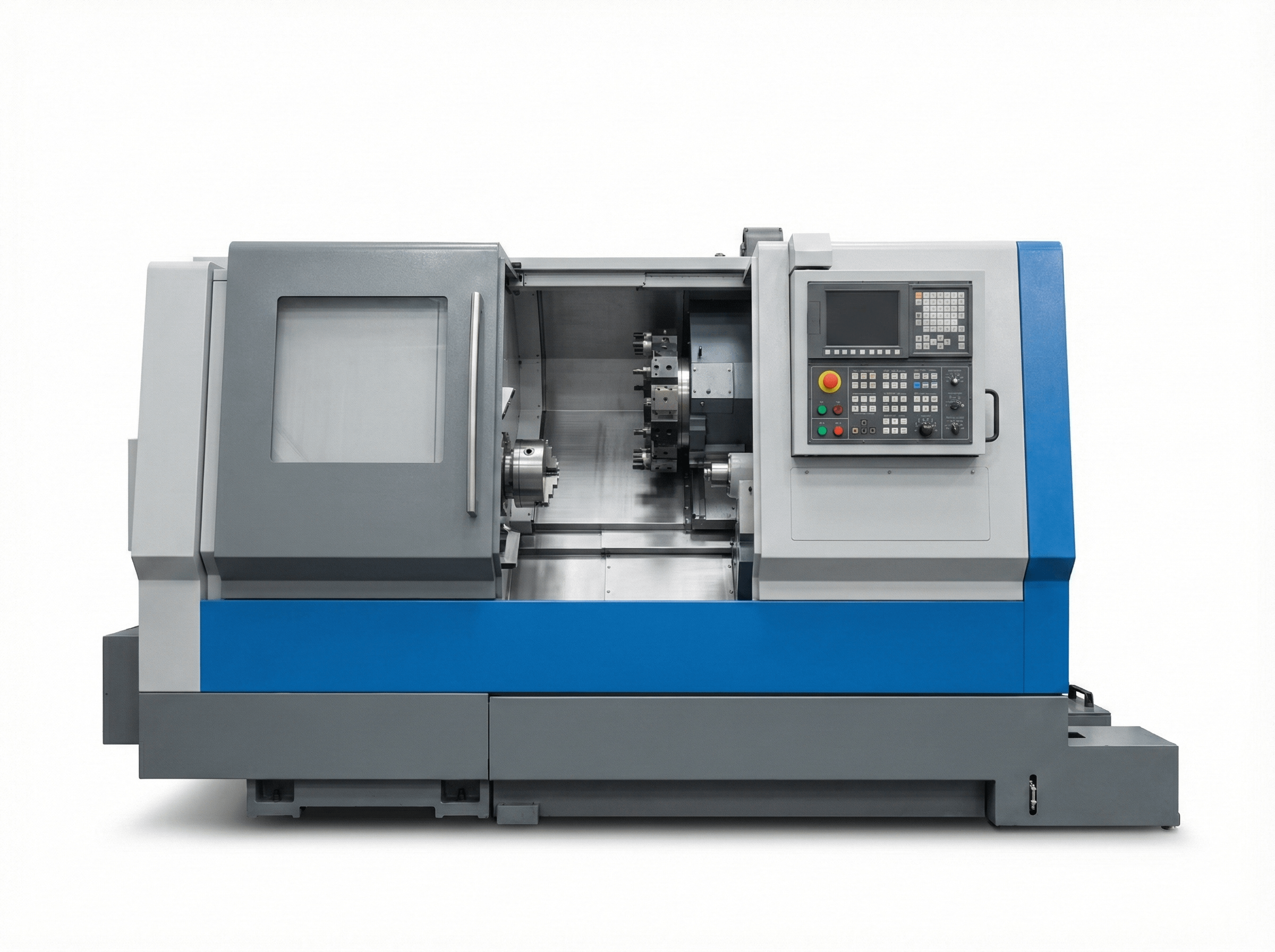
HANKOOK PROTURN 90/7000 CNC LATHE
HANKOOK · PROTURN 90/7000
Specifications & Market Value
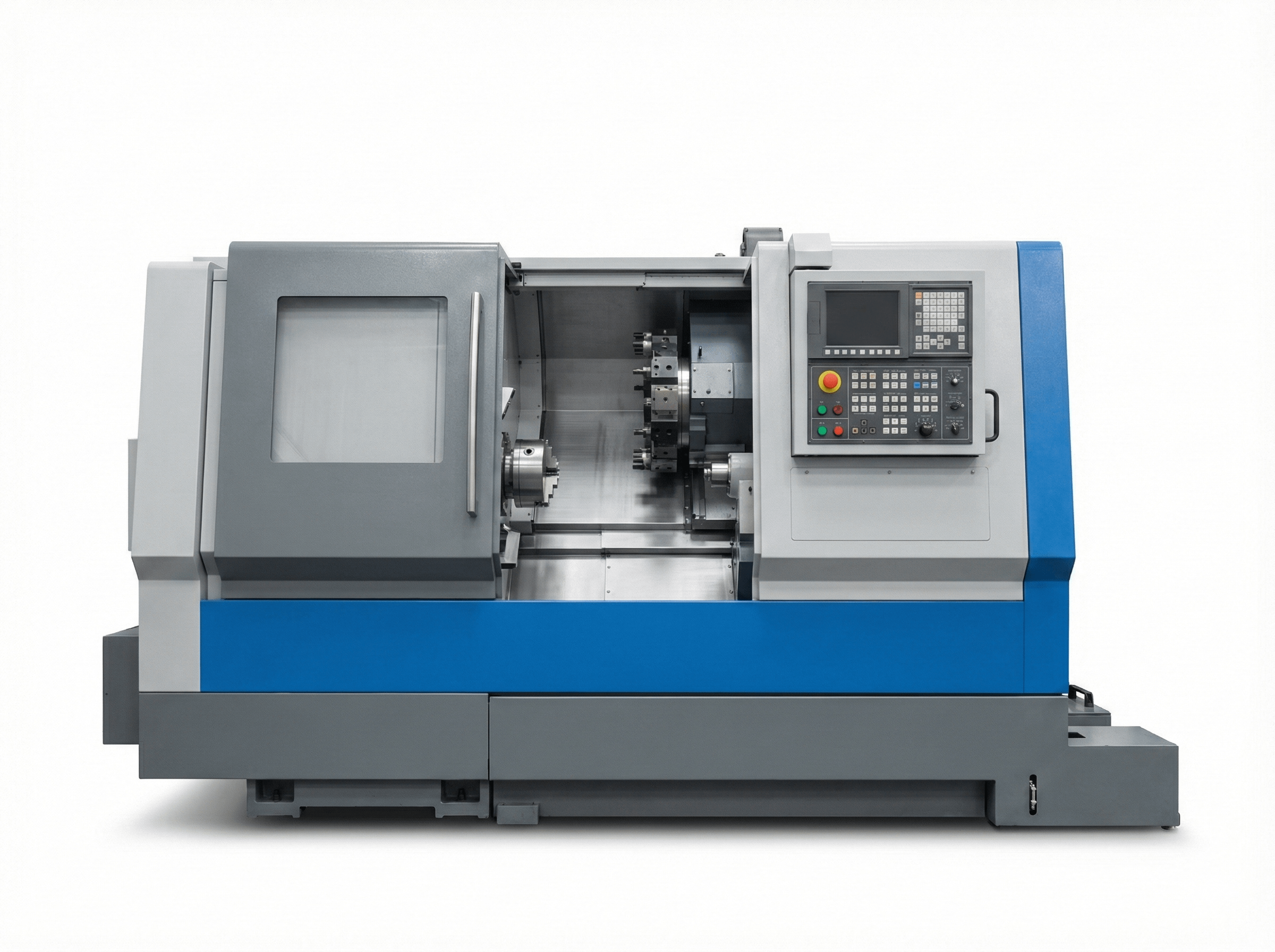
 Reference image
This CNC lathe features a robust design with a 34.6-inch swing and a machining length of 280 inches, making it suitable for large-diameter and long-part turning operations. The machine is equipped with a Fanuc 20-TA CNC control system, which provides advanced automation and precision for industrial machining tasks. The Fanuc 20-TA control offers a 9-inch monitor, 2-axis readout and interpolation, and supports six CNC operation modes including MEM, EDIT, MDI, Manual/HANDWHEEL, Machining Guidance, and Reference Return. It allows background editing of G-code programs during execution (optional), and features a conversational graphics programming interface for ease of use. The control supports both diameter and radius programming, as well as absolute and incremental programming modes, with inch and metric input and display options. The system includes triple electronic handwheels for simultaneous manual and automatic turning, and a multiplier switch for handwheel sensitivity (0.0001”, 0.001”, 0.01”). Constant Surface Speed (CSS) control is standard for both manual and automatic operations. The CNC provides full control of coolant and work light functions via M-codes, and supports up to 63 part program storage locations with 16 tool geometry and 16 tool wear offsets, including tool nose radius compensation. Backlash error compensation and ballscrew pitch error compensation are built-in for improved accuracy. The control also features a built-in RS-232 port for program transfer and self-diagnostics with on-screen error messages. This combination of large swing, extended machining length, and advanced Fanuc 20-TA control delivers high productivity and precision for demanding turning applications.
Specifications, market trends, and valuation estimates are compiled from manufacturer documentation, historical sales, and industry sources. While care is taken to ensure accuracy, this information is provided for reference purposes only and may contain errors or omissions. Users should independently verify all data before making buying or selling decisions. Valuations do not represent guaranteed transaction prices or binding offers, and Aucto assumes no liability for decisions made using this data.
Spot an error or missing detail? Help us keep our equipment guides accurate for the community.

 A+
A+ Auction Value
$245,000
 Range$50,000 – $350,000
 Sells in ~ 30 days
 Retail Value
—
Sells in ~ 180 days
Item functions as originally intended, shows signs of normal wear. Change the condition to see how it moves both values.
Market Intelligence
HANKOOK · PROTURN 90/7000
GOODA · TH-1000NC
DN SOLUTIONS · LYNX 2600SY
FOLLOW · PKL210A
MAZAK · MULTIPLEX 6300Y
ACRA · FEL-E 28200
MAZAK · INTEGREX 100-IV S
AMERA SEIKI · S-36