BAOMA BM320E WIRE EDM MACHINE
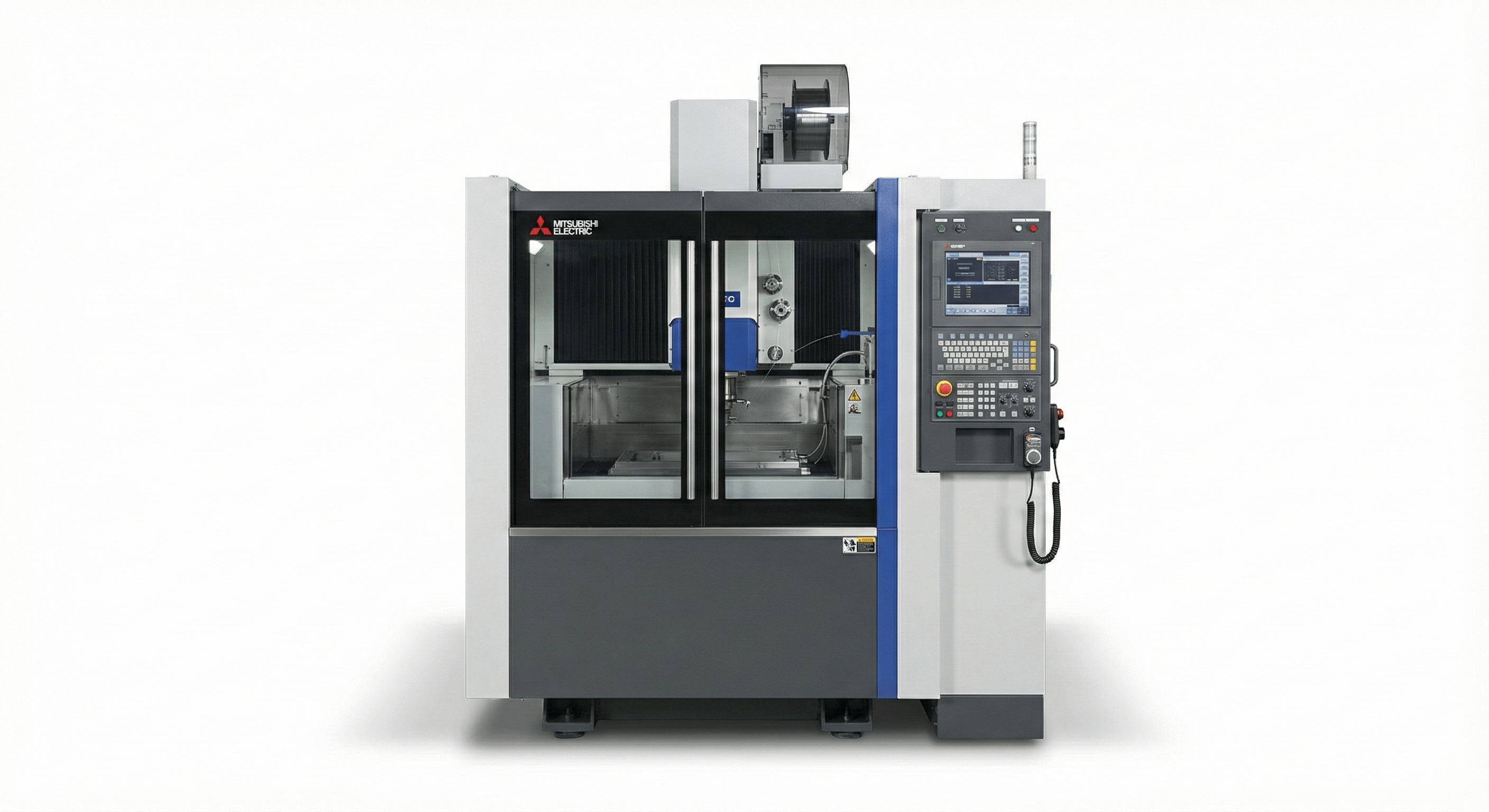
Equipment Overview
Share Link- OEM
- BAOMA
- Model
- BM320E
- Year of Manufacture
- -
- Category
- WIRE EDM MACHINES
Market Value Calculator
A+Technical Description
The BAOMA BM320E Wire EDM machine features a CNC control system with a working travel of 9.84 inches (X-axis) and 12.6 inches (Y-axis), translating to approximately 250 x 320 mm table travel. It is equipped with a highly precise wire-cutting mechanism capable of handling wire diameters from 0.15 to 0.2 mm, powered by a maximum working current of 6 A and a wire speed range of 5 to 11 meters per minute. The machine supports a maximum cutting thickness of 300 mm and can achieve cutting tapers up to ±30° for materials up to 100 mm thick. Surface finish quality is excellent, achieving roughness of ≤2.5 µm on a single cut and ≤1.2 µm with multi-cutting, maintaining a precision tolerance of ≤0.012 mm. It uses a water-based BM2 or BM4 dielectric solution in a 56 to 100-liter tank, ensuring stable machining conditions. Structural components include precision steel linear guideways and high-quality ball screws sourced from Taiwan, contributing to superior motion accuracy and rigidity. The control system runs BMXP software on a Windows XP platform, enabling features such as taper processing, shape interpolation, auto edge finding, and wire-break handling. Additional functionalities include automatic wire tension adjustment, motorized Z-axis control, ‘C’ type wire frames, and USB connectivity for data transfer and programming. The machine supports a load capacity of up to 300 kg on the worktable and operates on a rated power of approximately 3 KVA with voltage supply options between 220-415 V AC. Its modular internal design enhances maintainability and minimizes downtime, making it suitable for precision machining applications in tool and die industries and complex part manufacturing.
Technical Attributes
- Z-Axis Travel
- 3.93 ''
- Y-Axis Travel
- 12.6 ''
- X-Axis Travel
- 9.8 ''
- Wire Diameter
- 0.0080 ''
Data Accuracy and Verification
Specifications and technical details are compiled from manufacturer documentation, historical records, and third-party industry sources. While care is taken to ensure accuracy, this information is provided for reference purposes only and may contain errors or omissions. Users should independently verify all details before relying on them.
If you identify any inaccuracies, please help us improve our data by reporting them here.