HYUNDAI KIA HS500 HORIZONTAL MACHINING CENTER
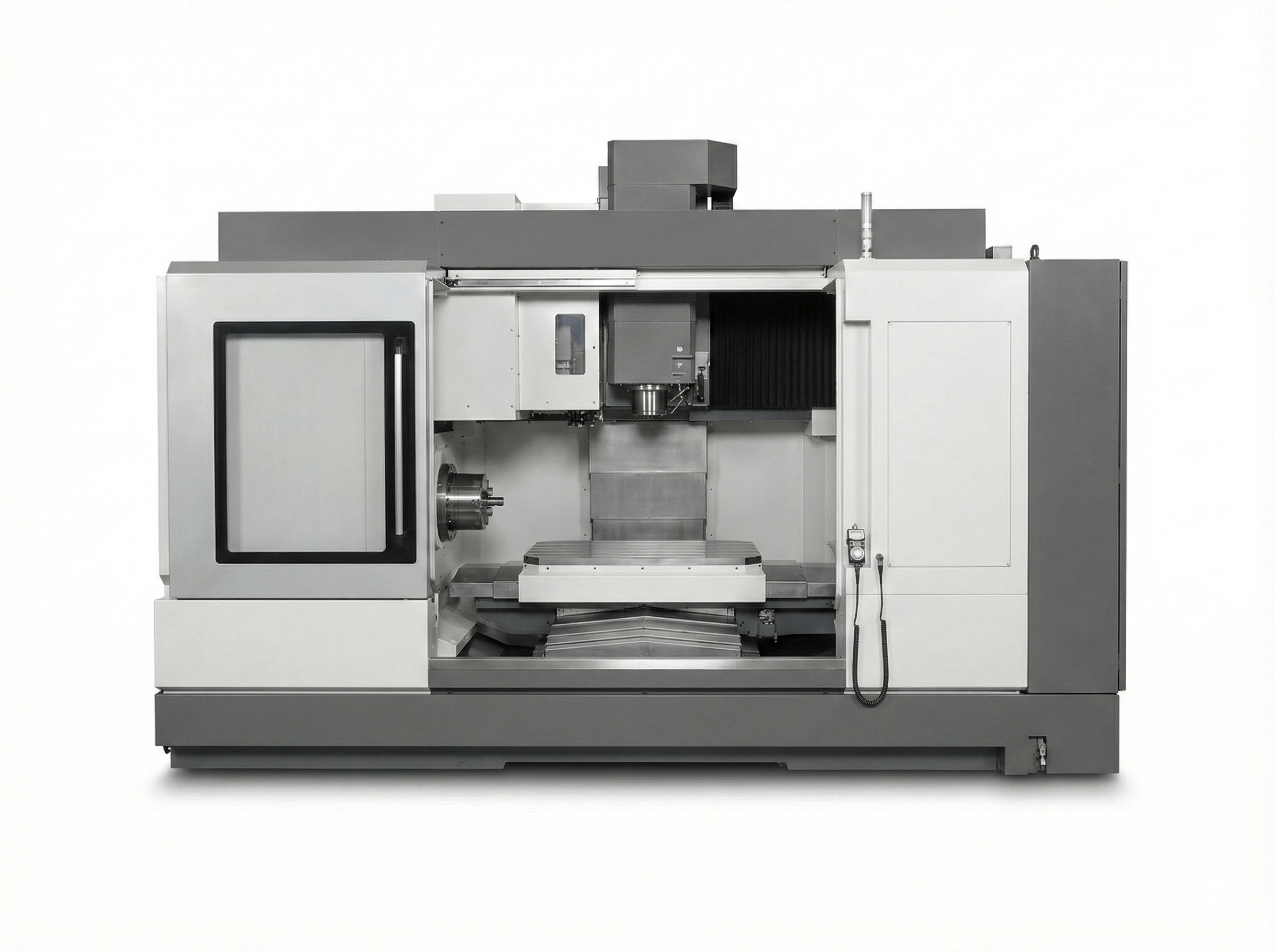
Equipment Overview
Share Link- OEM
- HYUNDAI KIA
- Model
- HS500
- Year of Manufacture
- -
- Category
- HORIZONTAL MACHINING CENTERS
Market Value Calculator
A+Technical Description
The 2008 Hyundai Kia HS500 Horizontal Machining Center is a high-precision, 4-axis CNC machine designed for efficient metalworking tasks. It features a substantial travel distance of 850 mm along the X-axis, 700 mm on the Y-axis, and 750 mm on the Z-axis, allowing the machining of moderately large parts with versatile geometries. The machine is equipped with a robust spindle capable of reaching speeds up to 15,000 RPM, which supports high-speed cutting operations and enhanced productivity. The spindle uses a BT40 or BBT40 taper, delivering ample torque and power for a range of applications, driven by a spindle motor rated at approximately 25 to 33.5 kW. The worktable measures 500 mm by 500 mm, supporting workpieces up to 500 kg, making it suitable for medium-sized components. It includes a pallet indexing system with 1-degree increment precision, enabling accurate positioning and multi-face machining. The machine is controlled by a FANUC CNC control system, commonly Series 21i or 32i-B, providing advanced programming and operational flexibility. The HS500 supports automatic tool changers typically with capacities around 60 tools, optimizing production cycles. Its rigid construction and well-maintained condition ensure high stability, precision, and repeatability in milling operations. Overall, the Hyundai Kia HS500 is engineered for robust horizontal machining tasks, combining precise axis travels, high spindle speed, and reliable control suitable for a broad range of industrial manufacturing needs.
Technical Attributes
- Control System
- FANUC 18I-MB
- Max Spindle Speed
- 15,000.00 RPM
- Spindle Power
- 25.00 HP
- X-Axis Travel
- 33.00 ''
- Z-Axis Travel
- 29.00 ''
- Y-Axis Travel
- 27.00 ''
- Spindle Taper
- CAT 40
- Table Size (LxW)
- 19.69 x 19.69
Data Accuracy and Verification
Specifications and technical details are compiled from manufacturer documentation, historical records, and third-party industry sources. While care is taken to ensure accuracy, this information is provided for reference purposes only and may contain errors or omissions. Users should independently verify all details before relying on them.
If you identify any inaccuracies, please help us improve our data by reporting them here.