Buy Now
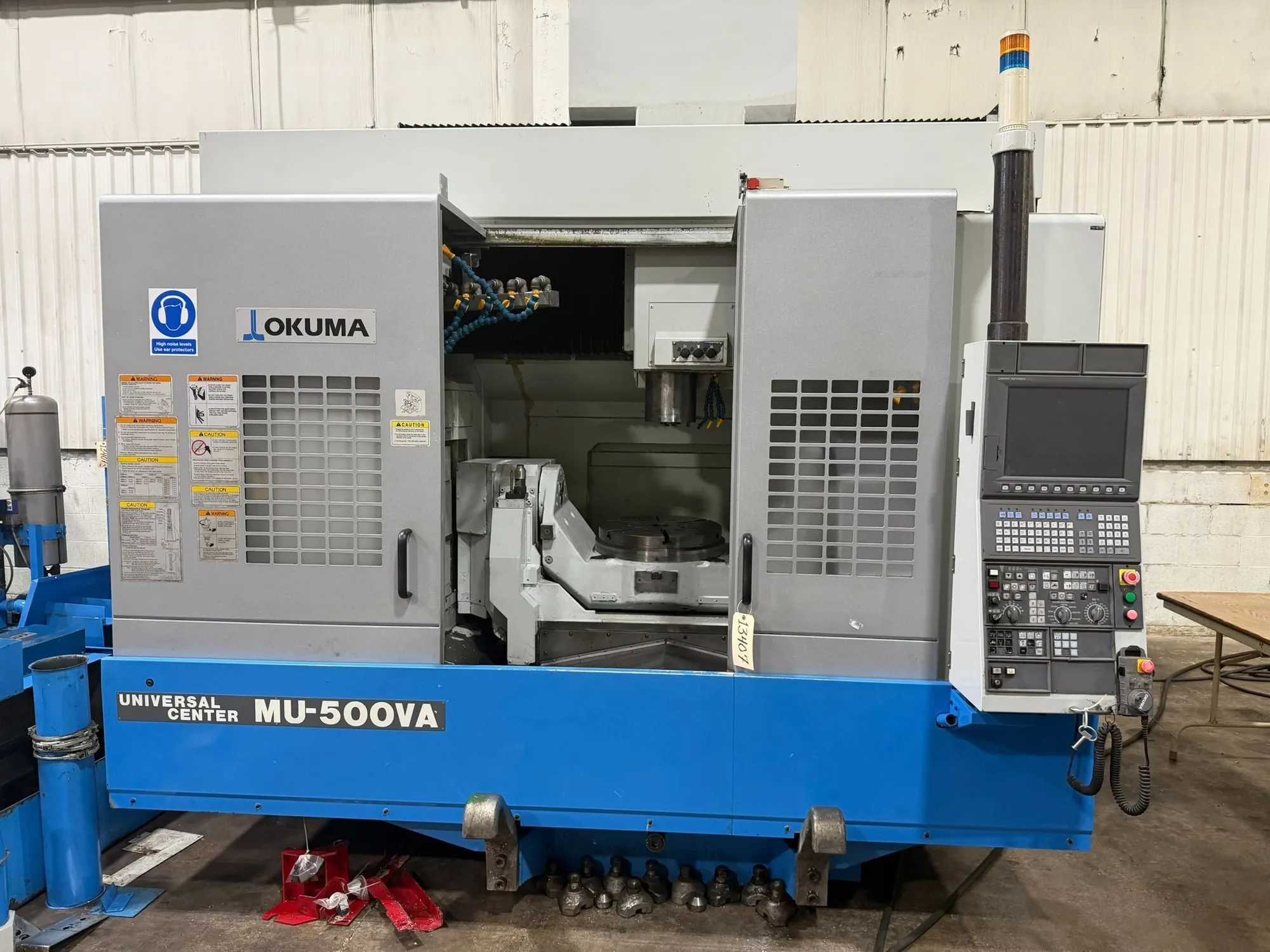
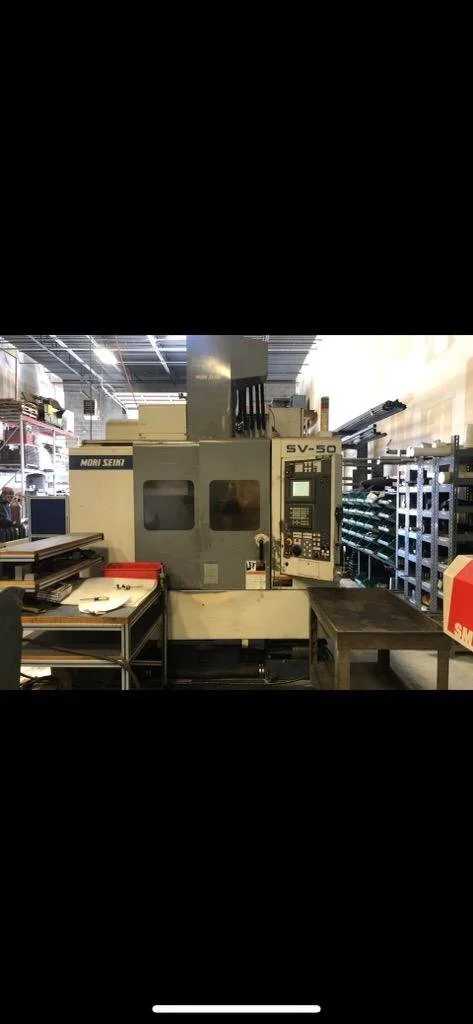
1999 Mori Seiki SV-50/40, CNC VMC, 1020X510X510MM Travel, CAT 40, 10K RPM, 15kW, 30 Tool ATC
$24,500
$406/moGeorgia
Specifications & Market Value
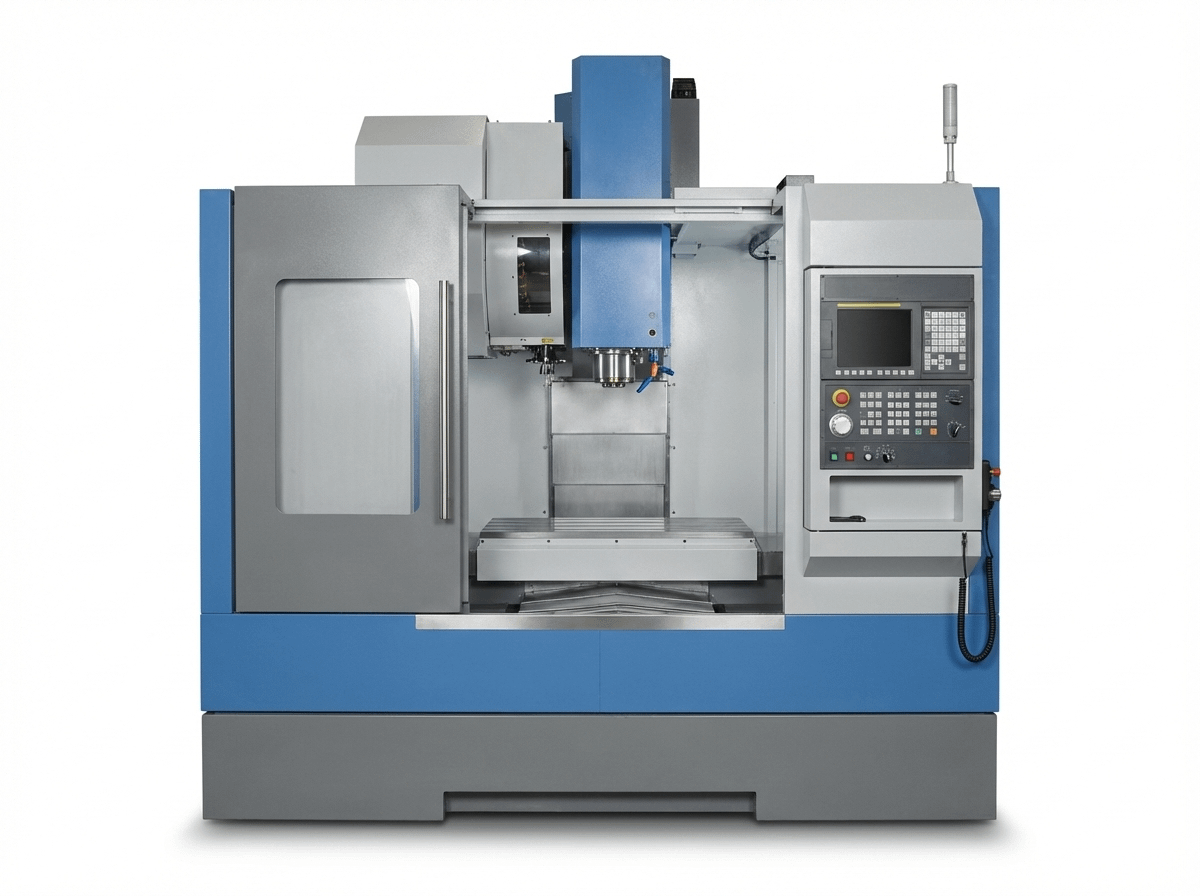
 Reference image
The 1995 Mori Seiki SV500 is a 3-axis vertical machining center positioned as a mid-size model in Mori Seiki's SV series, offering increased axis travels and spindle performance over the compact SV400 and SV50 while maintaining a manageable footprint. The SV500 features a CAT 40 spindle taper driven by a 20 HP motor to a maximum speed of 10,000 RPM, providing solid power and speed range for machining aluminum, steel, cast iron, titanium, and non-ferrous alloys. The work envelope spans 19.7 inches in X, 16.5 inches in Y, and 18.1 inches in Z, with a worktable measuring approximately 23.6 by 16.5 inches and fitted with T-slots for standard workholding. The Fanuc CNC control delivers reliable G-code programming, macro B capability, and broad compatibility with common CAM post-processors, supporting complex multi-tool programs. Box-way construction on all three axes provides the high rigidity and vibration damping characteristic of Mori Seiki's VMC design philosophy, contributing to consistent surface finish and dimensional repeatability. The automatic tool changer enables efficient multi-operation cycles. At approximately 14,300 pounds, the SV500 offers substantial structural mass relative to its size. Note: Mori Seiki merged with DMG to form DMG Mori around 2013; machines labeled MORI SEIKI are pre-rebranding era. The SV500 is well-suited for job shops, precision manufacturing cells, and toolroom environments requiring capable mid-size 3-axis VMC performance.
Specifications, market trends, and valuation estimates are compiled from manufacturer documentation, historical sales, and industry sources. While care is taken to ensure accuracy, this information is provided for reference purposes only and may contain errors or omissions. Users should independently verify all data before making buying or selling decisions. Valuations do not represent guaranteed transaction prices or binding offers, and Aucto assumes no liability for decisions made using this data.
Spot an error or missing detail? Help us keep our equipment guides accurate for the community.

 A+
A+ Auction Value
$6,265
 Range$1,000 – $9,100
 Sells in ~ 30 days
 Retail Value
—
Sells in ~ 180 days
Item functions as originally intended, shows signs of normal wear. Change the condition to see how it moves both values.
| Attribute | Selected1995 MORI SEIKI SV500 VERTICAL MACHINING CENTER | 1996 MORI SEIKI SV50 VERTICAL MACHINING CENTER | |
|---|---|---|---|
| OEM | MORI SEIKI | MORI SEIKI | |
| Model | SV500 | SV50 | |
| Year | 1995 | 1996 | |
| Max Spindle Speed | 10000 RPM | 8000 RPM | |
| Y-Axis Travel | 16.5 '' | 14.2 '' | |
| Table Size (LxW) | 23.6 x 16.5 | 23.6 x 14.2 | |
| Spindle Power | 20 HP | 15 HP | |
| X-Axis Travel | 19.7 '' | 19.7 '' | |
| # of Axes | 3 | 3 | |
| Control System | Fanuc | Fanuc | |
| Z-Axis Travel | 18.1 '' | 15.7 '' | |
| Similarity | — | 99% | |
| Auction Value$1,000 - $9,100Retail Value— | Auction Value$1,000 - $5,750Retail Value— | |
| Current Machine | View Details |
Marketplace