Buy Now
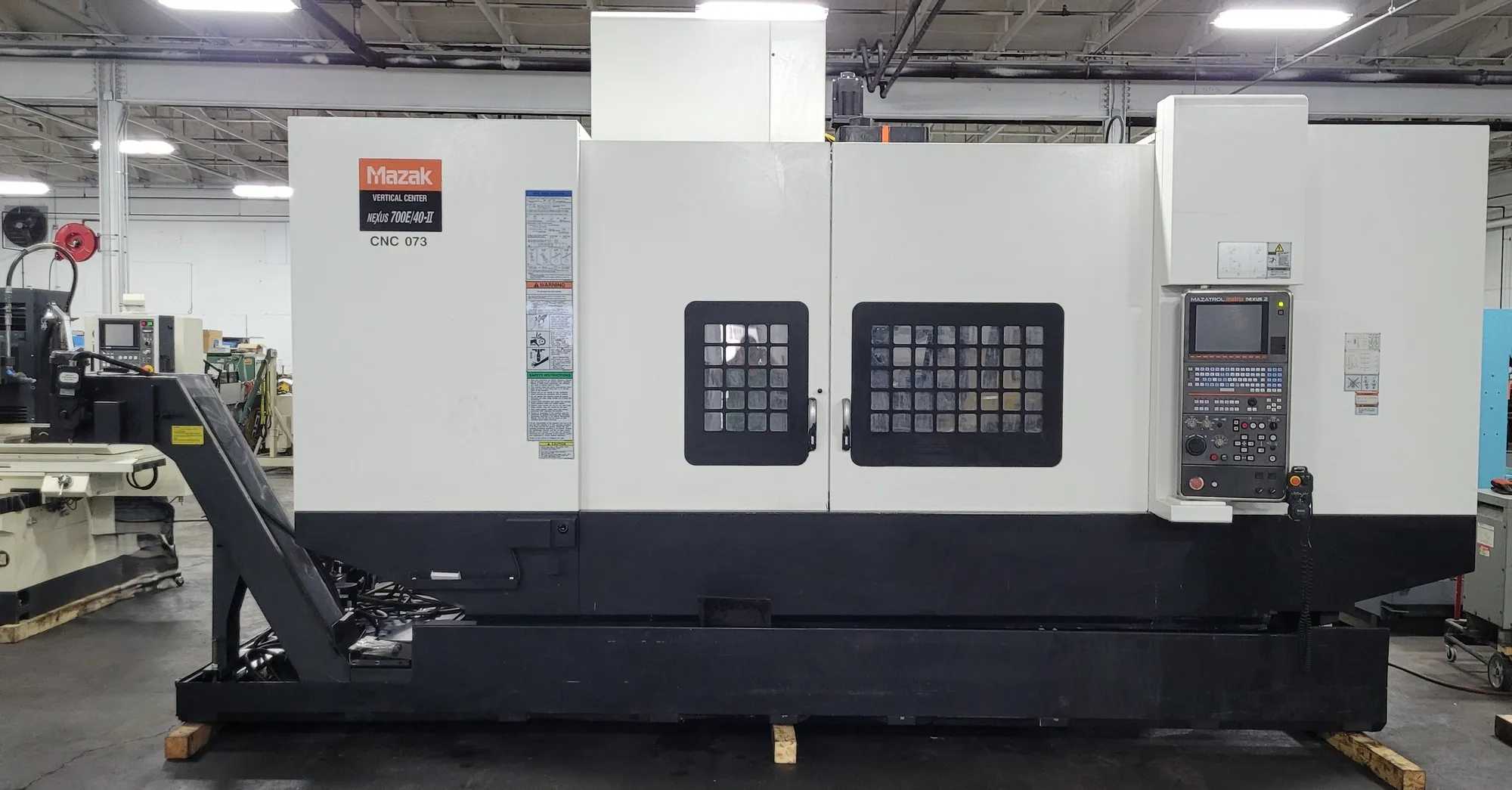
2016 Mazak Nexus Vcn 700E/40-II 4-Axis CNC Machining Center, 12K RPM, Upgraded Features
$169,500
$2,809/moKentucky
Specifications & Market Value
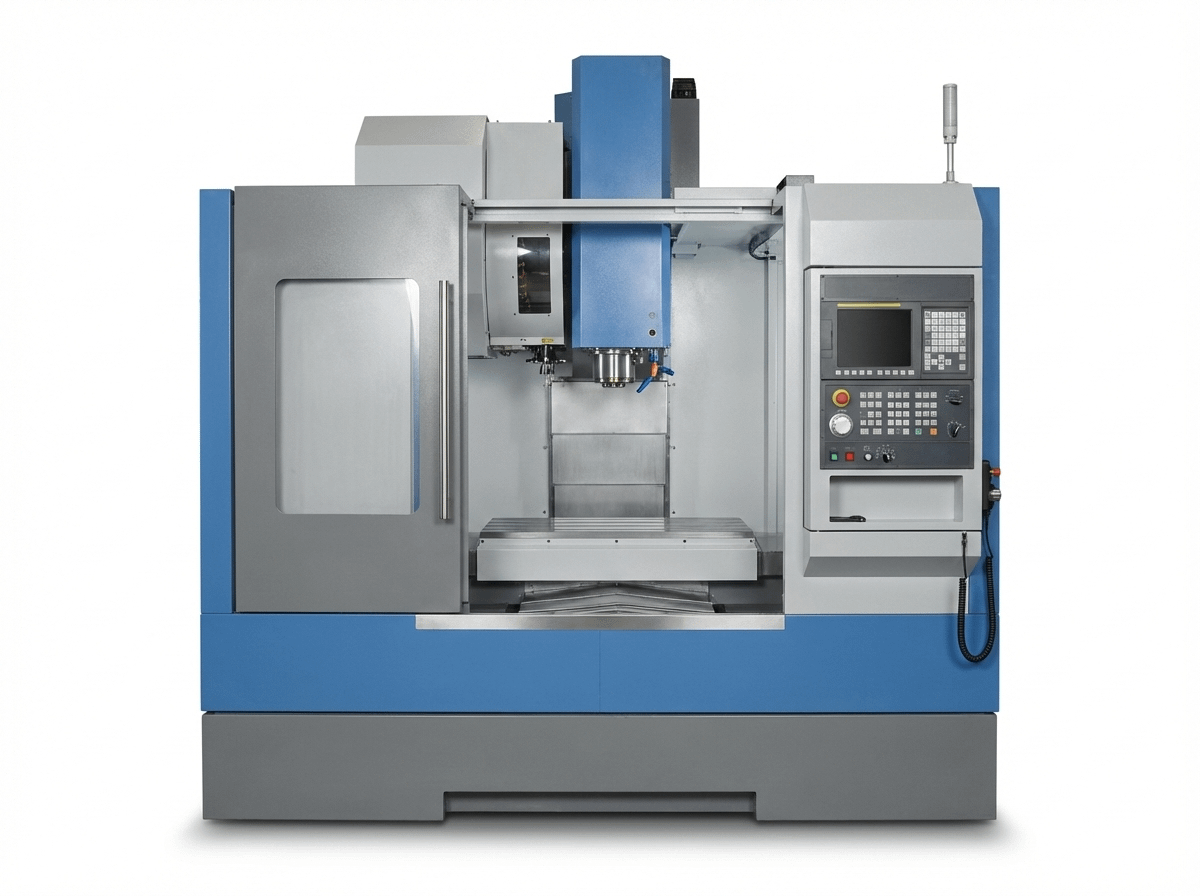
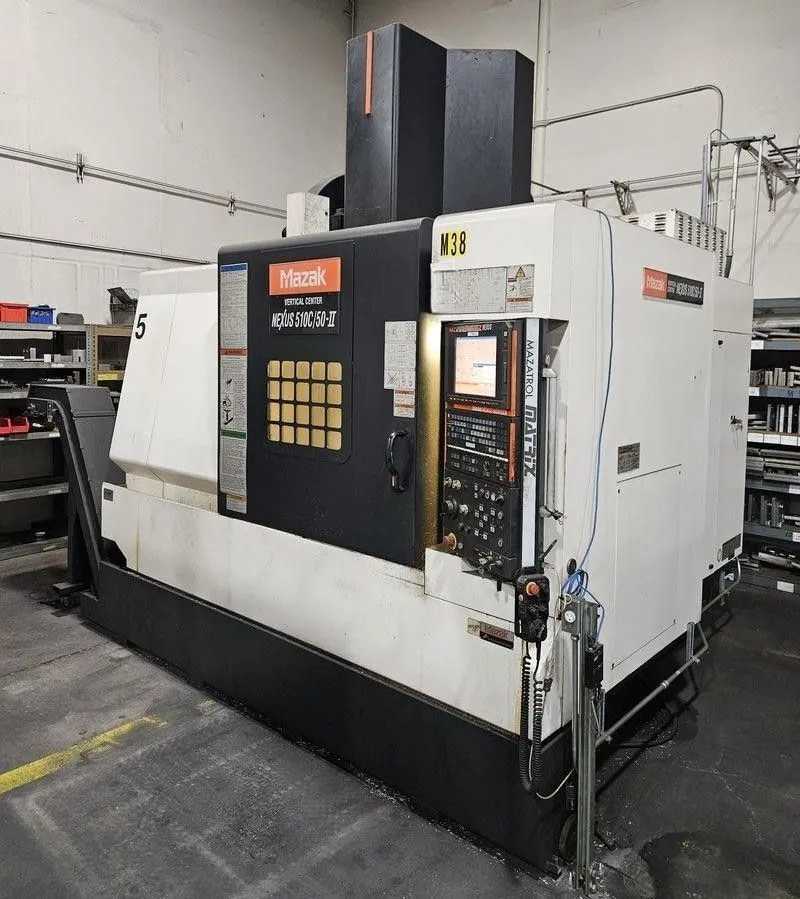
 Reference image
The 1986 Mazak VC500C is a 3-axis vertical machining center from Mazak's Vertical Center series, designed for versatile milling of small to medium-sized components in job shops, die and mold operations, and precision manufacturing environments. Note: a 1986 production date represents early production for the VC500C series; prospective buyers should confirm the control type and configuration via the machine serial number. The VC500C provides axis travels of 19.7 inches in X, 17.7 inches in Y, and 20.1 inches in Z, with the generous Z-axis stroke making it well suited for deep-cavity mold and die work as well as tall mechanical components. The spindle delivers 15 HP continuously through a CAT-40 taper and reaches a maximum speed of 8,000 RPM, balancing cutting force for steel and cast iron with the surface speed needed for aluminum alloys. At approximately 8,800 pounds, the VC500C provides solid structural rigidity for maintaining dimensional accuracy across sustained production cycles. An automatic tool changer enables complex multi-operation programs to be completed in a single setup, reducing operator intervention and non-productive time. The machine is equipped with the Mazatrol M-Plus CNC, Mazak's conversational programming platform that allows operators to generate programs interactively at the control panel without requiring G-code expertise. The VC500C is a practical and reliable three-axis VMC for shops requiring proven mechanical integrity, a capable work envelope, and straightforward Mazatrol programming in a mid-size vertical machining center.
Specifications, market trends, and valuation estimates are compiled from manufacturer documentation, historical sales, and industry sources. While care is taken to ensure accuracy, this information is provided for reference purposes only and may contain errors or omissions. Users should independently verify all data before making buying or selling decisions. Valuations do not represent guaranteed transaction prices or binding offers, and Aucto assumes no liability for decisions made using this data.
Spot an error or missing detail? Help us keep our equipment guides accurate for the community.

 A+
A+ Auction Value
$4,380
 Range$1,000 – $6,200
 Sells in ~ 30 days
 Retail Value
—
Sells in ~ 180 days
Item functions as originally intended, shows signs of normal wear. Change the condition to see how it moves both values.
| Attribute | Selected1986 MAZAK VC500C VERTICAL MACHINING CENTER | 2015 MAZAK VC300A VERTICAL MACHINING CENTER | |
|---|---|---|---|
| OEM | MAZAK | MAZAK | |
| Model | VC500C | VC300A | |
| Year | 1986 | 2015 | |
| Y-Axis Travel | 17.7 '' | 11.8 '' | |
| Control System | Mazatrol M-Plus | Mazatrol SmoothX | |
| # of Axes | 3 | 3 | |
| X-Axis Travel | 19.7 '' | 11.8 '' | |
| Max Spindle Speed | 8000 RPM | 12000 RPM | |
| Z-Axis Travel | 20.1 '' | 18.7 '' | |
| Spindle Power | 15 HP | — | |
| Similarity | — | 97% | |
| Auction Value$1,000 - $6,200Retail Value— | Auction Value$1,000 - $7,300Retail Value— | |
| Current Machine | View Details |
Marketplace